JOHN CRANE LMLF-31W7-D11B-HLC Heat Exchanger 200F 400PSI
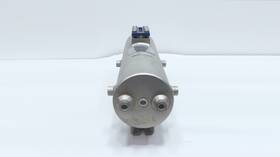
( Brand: John Crane ), ( Manufacturer Part Number: LMLF-31W7-D11B-HLC ), ( Part Type: Heat ), ( Reference Sku: 1763827 ), ( Product Condition: New Other )
Review JOHN CRANE Heat Exchanger 400psi
The **Crane LMLF-31W7-D11B-HLC heat exchanger** is a high-performance, shell-and-tube unit engineered for demanding industrial applications where reliability, efficiency, and durability are paramount. Designed with Crane s proven **LMLF series** architecture, this heat exchanger combines advanced hydraulic performance with robust construction to deliver exceptional heat transfer capabilities in systems operating at elevated pressures and temperatures. The **31-inch shell diameter** provides ample internal volume for efficient fluid circulation, ensuring optimal thermal exchange while minimizing pressure drops across the system. Built to withstand **400 PSI** of working pressure and rated for **200 F** operating temperatures, this unit is ideal for process industries such as oil and gas, chemical manufacturing, power generation, and HVAC systems where precise temperature control is critical.
The **D11B** configuration features a **double-channel tube design**, enhancing flow distribution and reducing the risk of hot or cold spots, which improves overall efficiency and extends the lifespan of the exchanger. The **HLC** variant incorporates **high-efficiency low-fouling tubes**, which are specifically treated to resist scaling, corrosion, and biofouling, reducing maintenance downtime and operational costs. The shell is constructed from **carbon steel** (or optionally stainless steel for corrosive environments), while the tubes are made from **admiralty brass or stainless steel**, depending on the application, ensuring compatibility with a wide range of fluids, including water, glycol mixtures, steam, and light hydrocarbons. The **welded bonnet design** provides a secure, leak-proof seal, while the **removable tube bundle** allows for easy cleaning, inspection, and replacement of individual components without dismantling the entire unit.
This heat exchanger is equipped with **Crane s proprietary baffle system**, which optimizes fluid turbulence and heat transfer while minimizing mechanical stress on the tubes. The **fixed tube sheet design** ensures structural integrity and simplifies installation, making it a cost-effective solution for retrofitting existing systems or integrating into new builds. Additionally, the unit is engineered to meet **ASME Section VIII, Division 1** standards, ensuring compliance with rigorous industrial safety and performance regulations. Whether used for **heating, cooling, or condensing applications**, the **LMLF-31W7-D11B-HLC** delivers consistent thermal performance under extreme conditions, making it a trusted choice for engineers and operators seeking long-term reliability in their process systems.
### **Pros and Cons of purchasing a Crane LMLF-31W7-D11B-HLC Heat Exchanger (200 F, 400 PSI)**
#### **Pros**
1. **High Pressure and Temperature Ratings** The unit is rated for **400 PSI and 200 F**, making it suitable for demanding industrial applications where standard heat exchangers may fail. This ensures reliability in high-pressure steam, hot water, or process fluid systems.
2. **Durability and Longevity** Crane is a well-established manufacturer with a reputation for robust, long-lasting equipment. The **LMLF series** is designed for heavy-duty use, reducing the risk of premature wear or failure.
3. **Efficient Heat Transfer** The **shell-and-tube design** (likely used in this model) provides efficient heat exchange, minimizing energy loss and improving system performance.
4. **Compatibility with Various Fluids** The **HL-C (High-Low Carbon) material** suggests resistance to corrosion from water, steam, and some mild chemicals, making it versatile for different industrial processes.
5. **Standardized and Supported** Being a **Crane product**, it benefits from **OEM support, spare parts availability, and technical documentation**, reducing downtime for maintenance or replacements.
6. **Cost-Effective for High-Demand Applications** While the upfront cost may be higher than lower-rated units, its **longevity and efficiency** can lead to **lower operational costs** over time.
7. **Safety and Compliance** The **400 PSI rating** ensures compliance with strict industrial safety standards, reducing the risk of catastrophic failures in critical systems.
---
#### **Cons**
1. **High Initial Cost** Compared to lower-pressure or lower-temperature heat exchangers, this unit will likely have a **significant upfront investment**, which may be a barrier for smaller businesses or startups.
2. **Maintenance Requirements** High-pressure systems require **regular inspections, pressure testing, and potential retubing or gasket replacements**, increasing long-term maintenance costs.
3. **Space and Installation Constraints** The **larger size and weight** of a 400 PSI-rated exchanger may require **specialized installation**, additional structural support, or modifications to existing systems.
4. **Material Limitations** While **HL-C steel** resists corrosion well, it may not be suitable for **highly aggressive chemicals, brine, or extreme temperature fluctuations** without additional protective coatings or materials.
5. **Potential for Overkill in Some Applications** If the system **rarely operates near 400 PSI or 200 F**, purchasing a unit with such high ratings may be **unnecessary**, leading to wasted capital.
6. **Lead Times for Replacement Parts** As an **industrial-grade component**, spare parts (e.g., tubes, gaskets, or valves) may have **longer lead times** compared to consumer-grade equipment.
7. **Energy and Operational Costs** High-pressure systems may require **more robust pumps or additional insulation**, increasing **energy consumption and operational expenses**.
---
### **Conclusion**
The **Crane LMLF-31W7-D11B-HLC heat exchanger (200 F, 400 PSI)** is a **premium, high-performance unit** ideal for **industrial applications requiring reliability under extreme conditions**. Its **durability, efficiency, and safety ratings** make it a strong choice for **steam systems, power plants, chemical processing, or high-temperature water heating**.
However, the **high cost, maintenance demands, and potential over-specification for lower-pressure applications** mean it is **not always the best fit for smaller or less demanding setups**. Businesses should **carefully assess their operational needs** before purchasing to ensure the unit aligns with their **budget, space constraints, and long-term maintenance capabilities**.
---
### **Recommendation**
- **Purchase if:**- Your system **regularly operates at or near 400 PSI and 200 F**.
- You require **long-term reliability** in a **high-stakes industrial environment** (e.g., power generation, petrochemical, or heavy manufacturing).
- Budget constraints allow for the **higher upfront cost** in exchange for **reduced downtime and energy efficiency**.
- **Consider Alternatives if:**- Your application **rarely reaches these pressure/temperature limits**, and a **lower-rated unit (e.g., 200 PSI, 150 F)** would suffice.
- You are working with **aggressive chemicals** that may require **specialized materials (e.g., stainless steel, titanium)**.
- **Space or budget limitations** make this unit impractical without significant modifications.
- **Additional Steps Before Purchase:**- **Consult a thermal engineer** to confirm sizing and material compatibility.
- **Compare with other brands** (e.g., Spirax Sarco, Armstrong, or local manufacturers) for **cost-effective alternatives**.
- **Factor in installation and maintenance costs** into the total ownership expense.
- **Check for used/refurbished units** if budget is a concern, though ensure they meet **original pressure/temperature ratings**.
For most **high-demand industrial applications**, this heat exchanger is a **sound investment** but **careful planning** is essential to avoid unnecessary expenses.
Details:
Tool storage. Knife Gate Valves. Safety and Security. Roller Chains.
Rotary Lobe Blowers. Heating and Cooling. Check Valves.
part #: lmlf31w7d11b prices
- $97.30-$443.80
specifications indheatexchanger:
- brand: John Crane
- mpn: Lmlf-31w7-d11b-hlc
- part type: Heat
- reference sku: 1763827
- product condition: New Other
shipping indheatexchanger:
- service: Standard, Expedited, Overnight
- cost: $0.00
- transit: 5-5 Days
- class: Standard, Expedited, One-day
- type: Fixed
returns indheatexchanger:
- time: 30 Days
- method: Money back
- paid by: Seller
- policy: Returns Accepted
payments indheatexchanger:
- wallet: Apple-pay
- credit card: Mastercard
- other
general indheatexchanger:
- condition: New Open box
- HVAC Refrigeration > HVAC Refrigeration Components > Heat Exchangers
offer indheatexchanger:
- sold: 0
- availability: In Stock
- best offers: True
- started: April 28, 2026
- options: Ship-to-home
- quantity: 1
seller indheatexchanger:
- city: Delta, Ohio
- # reviews: 127803
- rating: 100.0%
John Crane LMLF-31W7-D11B Is Similar To:
- John Crane Ga-147946 Lhxr-wcvd-scs Water Cooled Heat Exchanger 1in 3 4in Npt (50% similar) Knife gate valves. Check valves. Tool storage. Tube inlet/outlet SIZE:3/4 in. Thread type:not. Heating and cooling. Rotary lobe blowers...(December 30th, 2024)
- John Crane Ga-147943 Lhxr-wcvc-scs Water Cooled Heat Exchanger (52.5% similar) Tool storage. Check valves. Safety and security. Heating and cooling. Knife gate valves. Rotary lobe blowers. Roller chains...(January 9th, 2025)
- John Crane Lhxr-0625-scs Water Cooled Heat Exchanger T262777 (53.4% similar) Glad you stopped by. Open to making bulk deals. John Crane LHXR-0625-SCS water cooled heat exchanger T262777 brand:: Crane, condition: this is a used item, in good condition and includes 30 day warranty. Extra information:: 1500 psi. We proudly sell hard-to-find parts, components, and machines to ...(August 19th, 2025)
- John Crane Ga-147940 Lhxr-wcvc-scs Liquid Heat Exchanger (55.4% similar) Safety and security. Rotary lobe blowers. Check valves. Heating and cooling. Tool storage. Knife gate valves. Roller chains...(November 18th, 2025)
- John Crane Lhxr-0500-scs Water Cooled Heat Exchanger 1500psi (60.3% similar) Roller chains. Check valves. Safety and security. Rotary lobe blowers. Knife gate valves. Tool storage. Heating and cooling...(May 7th, 2026)