KAORI K010-12C-S3NP4 Brazed Plate Heat Exchanger Stud Mount
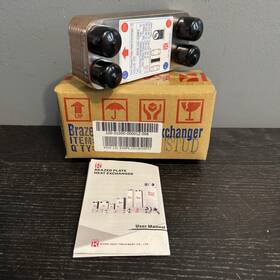
( Brand: Kaori ), ( Manufacturer Part Number: K010-12C-S3NP4 ), ( Type: Plate Heat Exchanger ), ( Unit Type: Unit ), ( Color: Silver ), ( Material: Copper )
Review KAORI New Brazed Plate Heat Exchanger Stud Mount
The **Kaori K010-12C-S3NP4 Brazed Plate Heat Exchanger (BPE) with Stud Mount** is a high-performance, compact thermal exchange solution engineered for precision, durability, and efficiency in demanding industrial and commercial applications. Part of Kaori s advanced line of brazed plate heat exchangers, this model features a **10-plate configuration (12C)** with a **nominal plate area of approximately 0.10 square meters**, making it ideal for medium-duty heat transfer tasks where space optimization and thermal performance are critical. The **S3NP4 designation** signifies a specialized design optimized for **low-pressure, low-temperature applications**, such as HVAC systems, solar thermal circuits, underfloor heating, and industrial process cooling, where reliability and energy efficiency are paramount. Constructed from **high-grade stainless steel (typically 316L or 304L)**, the plates are precision-brazed using a proprietary copper-based alloy, ensuring exceptional corrosion resistance, leak-proof integrity, and long-term operational stability even in corrosive or fluctuating thermal environments.
The **stud-mount design** enhances modularity and ease of installation, allowing for quick and secure attachment to mounting surfaces without the need for complex piping or additional hardware. This configuration is particularly advantageous in retrofitting existing systems or integrating into compact spaces where traditional gasketed plate heat exchangers may be cumbersome. The **turbulent flow channels** between the plates maximize heat transfer efficiency by promoting optimal fluid mixing and reducing thermal gradients, resulting in faster heating or cooling cycles with minimal energy loss. Additionally, the **corrugated plate pattern** is engineered to minimize fouling and scaling, extending the operational lifespan of the exchanger while maintaining consistent performance over time. With a **nominal pressure rating of up to 10 bar (145 psi)** and a **temperature range of -20 C to 120 C (-4 F to 248 F)**, this unit is well-suited for a wide array of applications, from residential underfloor heating systems to light-duty industrial processes requiring precise temperature control.
Beyond its technical specifications, the Kaori K010-12C-S3NP4 stands out for its **quiet operation and low maintenance requirements**, thanks to the absence of moving parts and the robust brazed construction that eliminates the need for periodic gasket replacements. The compact footprint and lightweight design further simplify logistics and installation, making it a cost-effective alternative to shell-and-tube heat exchangers in applications where space and weight are constraints. Whether deployed in renewable energy systems, commercial refrigeration, or industrial fluid heating, this heat exchanger delivers **superior thermal performance with minimal operational overhead**, aligning with modern sustainability goals while ensuring long-term reliability. For engineers and designers seeking a balance of performance, durability, and ease of integration, the Kaori K010-12C-S3NP4 represents a versatile and high-value solution for efficient heat transfer in diverse thermal applications.
The **Kaori K010-12C-S3NP4** is a brazed plate heat exchanger (BPHE) designed for compact, high-efficiency heat transfer in applications like HVAC, industrial processes, or refrigeration systems. Below is a detailed breakdown of its pros and cons, followed by a conclusion and recommendation.
---
### **Pros of the Kaori K010-12C-S3NP4 Brazed Plate Heat Exchanger**
1. **Compact Design and High Efficiency**
The brazed plate design maximizes heat transfer surface area in a small footprint, making it ideal for space-constrained installations. The corrugated plates create turbulence, improving efficiency and reducing fouling compared to traditional shell-and-tube exchangers.
2. **High Thermal Performance**
Brazed plate heat exchangers generally offer superior heat transfer coefficients (up to 3 5 times higher than shell-and-tube units) due to their thin plates and direct fluid contact. This results in lower temperature differences between fluids and reduced energy consumption.
3. **Corrosion Resistance**
The plates are typically made from stainless steel (e.g., 316L or 304), which provides excellent resistance to corrosion, scaling, and chemical degradation. This extends the unit s lifespan, especially in applications with aggressive fluids or varying pH levels.
4. **Low Pressure Drop**
The optimized plate geometry minimizes pressure loss across the exchanger, reducing pumping costs and energy use. This is particularly advantageous in systems where fluid flow rates are high.
5. **Modular and Scalable**
Kaori s BPHEs are modular, allowing for easy expansion by adding more units in parallel or series. This flexibility accommodates varying capacity requirements without major redesign.
6. **Low Maintenance**
Brazed plate exchangers have fewer moving parts and no gaskets (since they are brazed), reducing the risk of leaks and maintenance downtime. Cleaning is typically easier than in shell-and-tube designs, though periodic inspection is still recommended.
7. **Versatility in Applications**
Suitable for a wide range of fluids, including water, glycol mixtures, refrigerants, and mild chemicals, depending on the material grade. The stud-mount design (S3NP4) allows for easy installation and removal, simplifying servicing.
8. **Energy Efficiency**
The high efficiency translates to lower operational costs over time. For example, in HVAC systems, it can reduce heating/cooling loads, leading to significant energy savings.
9. **Quiet Operation**
Unlike some pump-driven systems, BPHEs operate quietly due to their lack of turbulent flow disruptions, making them suitable for sensitive environments.
10. **Environmental Friendliness**
The compact design and high efficiency contribute to lower energy consumption, aligning with sustainability goals. Additionally, the absence of gaskets reduces the risk of fluid leaks into the environment.
---
### **Cons of the Kaori K010-12C-S3NP4 Brazed Plate Heat Exchanger**
1. **Limited Temperature and Pressure Ratings**
Brazed plate exchangers typically have lower maximum temperature and pressure ratings compared to welded or shell-and-tube units. For the K010-12C-S3NP4, the exact ratings should be confirmed with Kaori s specifications, but most BPHEs are generally limited to:
- **Temperature:** Up to 200 C (392 F), though this can vary by material.
- **Pressure:** Usually up to 25 30 bar (362 435 psi), depending on the design.
This may restrict their use in high-temperature or high-pressure industrial processes (e.g., steam applications).
2. **Fragility and Risk of Plate Damage**
The brazed plates are more susceptible to mechanical damage from improper handling, installation, or maintenance. Dropping the unit or mishandling during installation can crack or deform the plates, compromising performance or leading to leaks.
3. **Limited Suitability for Highly Abrasive or Particulate Fluids**
While BPHEs are generally resistant to corrosion, they are not ideal for fluids containing abrasive particles or solids, as these can clog the narrow channels between plates or cause wear over time. Pre-filtration may be required in such cases.
4. **Higher Upfront Cost**
Brazed plate heat exchangers are typically more expensive to purchase than shell-and-tube units, especially for smaller capacities. However, their long-term efficiency often offsets this cost.
5. **Complex Installation and Alignment Requirements**
The stud-mount design (S3NP4) requires precise alignment during installation to ensure proper sealing and fluid distribution. Improper installation can lead to leaks or uneven flow, reducing efficiency.
6. **Limited Repair Options**
Unlike shell-and-tube exchangers, brazed plate units cannot be easily repaired if plates are damaged. In most cases, the entire unit must be replaced, which can be costly.
7. **Potential for Fouling**
While BPHEs are less prone to fouling than shell-and-tube exchangers, they can still experience buildup over time, especially with fluids containing organic matter or minerals. Regular cleaning is necessary to maintain performance.
8. **Compatibility with Certain Fluids**
Not all fluids are compatible with the materials used in BPHEs. For example, highly acidic or alkaline fluids may require specialized materials (e.g., titanium plates), which can increase costs.
9. **Noise in Some Applications**
While generally quiet, some BPHEs can produce slight noise due to fluid turbulence, particularly at high flow rates. This is usually minimal but may be a consideration in very sensitive environments.
10. **Vendor Dependency**
Kaori s BPHEs are proprietary, meaning replacement parts or support may be limited to authorized dealers. This could pose challenges if the manufacturer goes out of business or if parts become unavailable.
---
### **Conclusion**
The **Kaori K010-12C-S3NP4** is an excellent choice for applications requiring **high efficiency, compact design, and corrosion resistance**, such as:
- HVAC systems (heating/cooling loops).
- Refrigeration and chiller applications.
- Industrial process heating/cooling with clean or mildly abrasive fluids.
- Water treatment or glycol-based systems.
However, it is **not ideal** for:- High-temperature or high-pressure applications beyond its rated limits.
- Systems with abrasive or highly particulate fluids without proper filtration.
- Applications where mechanical robustness is critical (e.g., harsh industrial environments with frequent handling).
The unit s strengths in **energy efficiency, space savings, and low maintenance** make it a strong contender for many commercial and light industrial uses, provided the operating conditions align with its design constraints.
---
### **Recommendation**
**Buy the Kaori K010-12C-S3NP4 if:**- Your application requires **high thermal efficiency** in a **compact space**.
- The fluids involved are **non-abrasive and compatible** with stainless steel (or the specified material).
- The **temperature and pressure** stay within the unit s rated limits (verify with Kaori s documentation).
- You prioritize **low maintenance and energy savings** over upfront cost.
- You can ensure **proper installation and handling** to avoid damage.
**Avoid or consider alternatives if:**- Your system operates at **extreme temperatures or pressures** beyond the unit s capacity.
- The fluids are **highly abrasive, particulate-laden, or chemically aggressive** (requiring non-standard materials).
- You need **easy repair or replacement** of individual components (shell-and-tube exchangers may be better).
- Budget constraints make the higher upfront cost prohibitive, and long-term savings are not a priority.
**Alternatives to Consider:**- **Shell-and-tube heat exchangers:** Better for high-pressure or abrasive fluids but less efficient and bulkier.
- **Plate-and-frame heat exchangers (with gaskets):** More flexible for cleaning/maintenance but require gasket replacement.
- **Welded plate heat exchangers:** Higher pressure/temperature ratings but less modular than brazed units.
**Final Suggestion:**Before purchasing, **confirm the exact specifications** (materials, pressure/temperature ratings, and fluid compatibility) with Kaori s technical support or a certified distributor. Additionally, consult an HVAC or process engineer to ensure the unit is sized correctly for your application. If installed and operated correctly, the K010-12C-S3NP4 will deliver **superior performance and cost savings** over its lifespan.
Details:
New stock from a business that closed one of its locations.
part #: k01012cs3np4 price
- $19.99
specifications indheatexchanger:
- brand: Kaori
- mpn: K010-12c-s3np4
- type: Plate Heat Exchanger
- unit type: Unit
- color: Silver
- material: Copper
payments indheatexchanger:
- credit card: Visa
- other
- wallet: Apple-pay
offer indheatexchanger:
- options: Ship-to-home
- started: April 18, 2026
- sold: 0
- availability: In Stock
shipping indheatexchanger:
- transit: 4-9 Days
- class: Standard
- service: USPS Ground Advantage
- carrier: USPS
- type: Calculated
- cost: $7.52
general indheatexchanger:
- condition: New
- HVAC Refrigeration > HVAC Refrigeration Components > Heat Exchangers
seller indheatexchanger:
- # reviews: 411
- rating: 100.0%
- city: Southfield, Michigan
returns indheatexchanger:
- policy: No Returns
Kaori K010-12C-S3NP4 Is Similar To:
- Kaori K030 16f Np4 Flat Plate brazed Type Heat Exchanger P01 (57.6% similar) Model P01 max working temperature 150 c pressure 435 psi. Kaori brazed plate / flat type heat exchanger...(January 26th, 2024)
- Kaori K030-6w-1 P01 6 Plate 3 Inch X 7-1 2 Brazed Heat Exchanger 1 2 Ports (53.6% similar) Factory id: P01. Kaori heat treatment co. 6 plates 3 x 7-1/2 brazed plate heat exchanger, 1/2 ports weld. Made in Taiwan. Kaori brazed plate heat exchanger 6 plates. Refrigerants: all except ammonia. Type: K030-6W-1...(October 16th, 2024)
- Kaori K050-24c-s8 Brazed Heat Exchanger 200 Deg C Max Temp-new In Box (60.2% similar) Kaori brazed heat exchanger K050-24C-S8 200 deg c max temp-new in box...(October 16th, 2024)
- Kaori K050-14mn-nb115 New Brazed Plate Heat Exchanger 200 C 10-15bar Warranty (68.1% similar) 30 day hassle free warranty. Ships fast with ups. No warranty on untested/parts listings. Location TBB4047. The j j triple aim: great products, great price, service. Handled with care quickly. Local pick-up is always an option. Fast and flexible shipping. Why j j industrial supply. Fast shipped with...(April 28th, 2025)
- Kaori K070-70wn-c04 New Sealed Brazed Plate Heat Exchanger 200 C 10-15bar (66.7% similar) Location 3002. No long wait times and absolutely no price gouging. Not the right size. Not the right part. J j also offers a 30-DAY worry free guarantee. New sealed factory packaging Kaori K070-70WN-C04 brazed plate heat exchanger 200 c 10-15BAR fast shipped and backed by warranty...(June 2nd, 2025)
- Kaori K030-16cna-nb171 Preowned Brazed Plate Heat Exchanger 200 C 10-15bar (66.2% similar) Not the right part. J j also offers a 30-DAY worry free guarantee. Location TBB3002. Not the right size. No long wait times and absolutely no price gouging. Preowned Kaori K030-16CNA-NB171 brazed plate heat exchanger 200 c 10-15BAR fast shipped and backed by warranty...(June 2nd, 2025)
- Kaori K030-18wn-nb242 New Surplus Brazed Plate Heat Exchanger 200 C 10-15bar (66.7% similar) Location TBB3002. Not the right part. Not the right size. No long wait times and absolutely no price gouging. J j also offers a 30-DAY worry free guarantee. New surplus without factory packaging Kaori K030-18WN-NB242 brazed plate heat exchanger 200 c 10-15BAR fast shipped and backed by warranty...(June 2nd, 2025)
- Kaori K030-12mn New Surplus Brazed Plate Heat Exchanger 200 C 10-15bar Warranty (68.1% similar) Not the right size. Location TBB3002. Not the right part. J j also offers a 30-DAY worry free guarantee. No long wait times and absolutely no price gouging. New surplus without factory packaging Kaori K030-12MN brazed plate heat exchanger 200 c 10-15BAR fast shipped and backed by warranty...(June 2nd, 2025)
- Kaori 210927161012-16xna-nb176 Technology K030-16xna-nb176 Hydrogen Heat Exchanger Brazed Plate (42.8% similar) Part #: Kaori 210927161012-16XNA-NB176 for sale...(June 9th, 2025)
- Kaori K095-20bm-npb Brazed Plate Heat Exchanger Used (75.9% similar) This unit is categorized as a brazed plate heat exchanger and includes the following capabilities: 95 plates, 20 bar pressure rating, nob nickel plate construction. It is designed for efficient thermal transfer in hvac and industrial fluid systems. Stock #: IGAM1980280. Model: K095-20BM-NPB. Kaori ...(September 30th, 2025)
- Getinge Oem Kaori K050-30m-get1 Plate Heat Exchanger 200 C 30 Bar 61301608571 (49.3% similar) With the brands reputation for quality and reliability, this plate heat exchanger is a valuable addition to any system requiring precise temperature control. Brazed unit to ensuring efficient heat transfer for industrial and commercial applications. Please review pictures as they are part of the. ...(March 15th, 2026)