HTG HTG028-14-3.0-L Brazed Plate Heat Exchanger Steel R22 R134A R404A
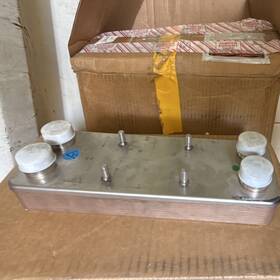
( Brand: Htg ), ( Manufacturer Part Number: HTG028-14-3.0-L ), ( Model: HTG028-14-3.0 ), ( Type: Brazed Plate Heat Exchanger ), ( Color: Silver ), ( Material: Steel ), ( Year Manufactured: 2022 )
Review HTG Brazed Plate Heat Exchanger Htg028-14-3.0 Steel Silver R22 R134a
The **HTG HTG028-14-3.0-L Brazed Plate Heat Exchanger** is a high-performance, compact thermal exchange solution engineered for precision refrigeration and HVAC applications, delivering exceptional efficiency in heat transfer while maintaining durability and reliability. Designed with a **steel construction** (specifically the **HTG028-14-3.0-L model**), this unit features a **brazed plate design**, ensuring leak-proof integrity and long-term operational stability. The compact yet robust structure is optimized for **R22, R134a, and R404a refrigerants**, making it versatile for a wide range of cooling systems, including commercial refrigeration units, air conditioning systems, and industrial chillers. The **HTG028-14-3.0-L** model incorporates **14 plates** arranged in a high-efficiency gasketed configuration, maximizing surface area for optimal heat exchange while minimizing pressure drop, which enhances overall system performance and energy savings. Constructed from **high-grade steel**, this heat exchanger is built to withstand demanding operating conditions, including high-pressure cycles and thermal stress, ensuring longevity even in harsh environments. Its **brazed construction** eliminates the need for traditional gaskets, reducing the risk of leaks and maintenance requirements while maintaining a clean, hygienic design ideal for food processing, pharmaceutical, and beverage industries where sanitation is critical. The **HTG028-14-3.0-L** is engineered for seamless integration into existing refrigeration circuits, offering flexibility in installation and compatibility with various refrigerant types, making it a cost-effective and scalable solution for both new installations and retrofits. Whether used in **commercial refrigeration, industrial cooling, or HVAC systems**, this heat exchanger delivers superior thermal performance, operational efficiency, and reliability, ensuring consistent cooling performance while minimizing energy consumption and maintenance downtime.
### **Pros and Cons of buying a HTG HTG028-14-3.0-L Brazed Plate Heat Exchanger (Steel, R22/R134a/R404a Compatible)**
#### **Overview**
The **HTG HTG028-14-3.0-L** is a brazed plate heat exchanger designed for refrigeration and HVAC applications, compatible with refrigerants like R22, R134a, and R404a. It is constructed with steel plates, offering durability and efficiency in heat transfer. Below is a detailed analysis of its advantages and disadvantages.
---
### **Pros**
1. **High Efficiency in Heat Transfer**
- Brazed plate heat exchangers are known for their compact design and large surface area, which maximizes heat transfer efficiency. This results in better performance compared to shell-and-tube or coil-based systems, reducing energy consumption and improving system cooling/heating capacity.
2. **Compatibility with Multiple Refrigerants**
- The unit supports **R22, R134a, and R404a**, making it versatile for retrofitting existing systems or adapting to new refrigerant regulations. This flexibility is valuable for businesses or facilities that may need to switch refrigerants in the future.
3. **Space-Saving Design**
- Plate heat exchangers are significantly smaller and lighter than traditional heat exchangers, allowing for easier installation in tight spaces. This is particularly beneficial in commercial or industrial settings where floor space is limited.
4. **Durability and Corrosion Resistance**
- Constructed from **steel**, this unit is designed to withstand high pressures and temperatures, making it suitable for harsh operating conditions. The brazing process ensures strong plate connections, reducing the risk of leaks over time.
5. **Low Maintenance Requirements**
- Compared to systems with moving parts (e.g., reciprocating compressors), plate heat exchangers have fewer components that can wear out or malfunction. This translates to lower maintenance costs and longer operational lifespan.
6. **Energy Savings**
- The efficient heat transfer reduces the workload on compressors and other system components, leading to **lower energy consumption** and operational costs. This is particularly advantageous for large-scale refrigeration or HVAC systems.
7. **Quick Installation and Modularity**
- The compact and modular nature of plate heat exchangers allows for faster installation compared to traditional designs. Additionally, if expansion is needed, additional plates can often be added without overhauling the entire system.
8. **Environmental Considerations**
- While the unit itself does not directly reduce refrigerant emissions, its efficiency can contribute to lower energy use, which indirectly reduces the carbon footprint of the system. Some newer models may also support lower-GWP refrigerants if compatibility is updated.
---
### **Cons**
1. **Limited Pressure and Temperature Ratings**
- Brazed plate heat exchangers, while durable, typically have **lower maximum pressure and temperature ratings** compared to some shell-and-tube designs. For applications requiring extremely high pressures (e.g., certain industrial processes), this unit may not be suitable without additional safeguards.
2. **Sensitivity to Contaminants**
- Plate heat exchangers can be **more susceptible to fouling** from dirt, oil, or refrigerant decomposition products. If the system is not properly maintained (e.g., regular cleaning, filter changes), performance can degrade over time, leading to inefficiencies or failures.
3. **Higher Upfront Cost**
- While plate heat exchangers offer long-term savings, the **initial purchase price** is often higher than that of traditional heat exchangers. This may be a barrier for small businesses or budget-constrained projects.
4. **Potential for Leaks**
- The brazed joints, though strong, are not impervious to leaks if damaged (e.g., by mechanical stress or improper handling during installation). Leaks can lead to refrigerant loss, reduced efficiency, or system failure if not addressed promptly.
5. **Refrigerant Compatibility Limitations**
- While the unit supports R22, R134a, and R404a, **R22 is being phased out** in many regions due to its ozone-depleting properties. Retrofitting to newer, lower-GWP refrigerants (e.g., R410A, R32, or R454B) may require additional modifications or a new unit, adding to long-term costs.
6. **Repairability Challenges**
- If a plate is damaged or corroded, **replacing individual plates can be difficult** and may require specialized tools or expertise. In some cases, the entire unit may need replacement, which can be costly.
7. **Noise Considerations**
- While generally quieter than reciprocating compressors, some plate heat exchanger systems may produce **higher noise levels** if not properly insulated or if refrigerant flow is turbulent. This could be a concern in noise-sensitive environments.
8. **Vendor and Warranty Considerations**
- The availability of **authorized service providers** for HTG products may vary by region. Ensuring that the unit comes with a **comprehensive warranty** and that local technicians are trained to service it is crucial to avoid downtime or costly repairs.
---
### **Ending Conclusion**
The **HTG HTG028-14-3.0-L brazed plate heat exchanger** is a **highly efficient, space-saving, and durable** solution for refrigeration and HVAC applications requiring compatibility with R22, R134a, or R404a. Its advantages in energy savings, compact design, and low maintenance make it an attractive choice for commercial, industrial, or large-scale residential systems where efficiency and reliability are prioritized.
However, potential buyers should carefully consider its **pressure/temperature limitations, sensitivity to contaminants, higher upfront cost, and refrigerant compatibility issues** (particularly the phase-out of R22). If the application involves **extreme operating conditions, high-pressure systems, or frequent refrigerant changes**, alternative heat exchanger designs (e.g., shell-and-tube) may be more suitable.
Additionally, **proper installation, regular maintenance, and access to trained technicians** are essential to maximize the unit s lifespan and performance. For businesses or facilities planning long-term use, evaluating the **total cost of ownership** including energy savings, maintenance costs, and potential future refrigerant upgrades will help determine whether this unit is the right investment.
---
### **Recommendation**
**Buy the HTG HTG028-14-3.0-L if:**- You need a **compact, efficient heat exchanger** for R22/R134a/R404a systems.
- Your application involves **moderate pressure/temperature conditions** and requires **low maintenance**.
- You prioritize **energy savings** and **long-term operational efficiency**.
- You have access to **proper installation and maintenance support**.
**Avoid or Consider Alternatives if:**- Your system operates under **extreme pressure or temperature conditions**.
- You are in a region where **R22 is being phased out**, and you need future-proofing for lower-GWP refrigerants.
- Budget constraints make the **higher upfront cost prohibitive**, and you can justify the investment based on long-term savings.
- Your facility lacks **experienced technicians** to service plate heat exchangers.
**Final Suggestion:**Before purchasing, conduct a **detailed system analysis** to ensure the HTG028-14-3.0-L aligns with your specific requirements. Consult with a refrigeration or HVAC specialist to assess compatibility, potential modifications, and long-term cost implications. If possible, request **performance data or case studies** from the manufacturer to validate its efficiency in applications similar to yours.
Details:
HTG Brazed Plate Heat Exchanger HTG028-14-3.0 Steel Silver R22 R134A R404A.
part #: htg028-14-3.0-l prices
- $99.00-$204.99
specifications indheatexchanger:
- brand: Htg
- mpn: Htg028-14-3.0-l
- model: Htg028-14-3.0
- type: Brazed Plate Heat Exchanger
- color: Silver
- material: Steel
- year manufactured: 2022
general indheatexchanger:
- condition: New Open box
- HVAC Refrigeration > HVAC Refrigeration Components > Heat Exchangers
payments indheatexchanger:
- other
- credit card: Diners-club
- wallet: Paypal
offer indheatexchanger:
- started: April 11, 2026
- availability: In Stock
- best offers: True
- quantity: 4
- sold: 0
- options: Ship-to-home
seller indheatexchanger:
- city: Springfield, Oregon
- rating: 100.0%
- # reviews: 1
shipping indheatexchanger:
- class: Standard
- cost: $99.54
- service: USPS Ground Advantage
- carrier: USPS
- type: Calculated
- transit: 5-9 Days
returns indheatexchanger:
- policy: No Returns
Htg R404A Is Similar To:
- Htg Htg032a-22 Braxed Plate Heat Exchanger Htg032a-22-3.0 M3 (66.7% similar) Up for sale is a new - not in original box Htg braced plate heat exchanger HTG032A-22-3.0 m3 M3...(July 19th, 2025)
- Htg Htg022-22-1 Brazed Plate Heat Exchanger Htg022-22-1.0-h (67.1% similar) Its brazed construction ensures durability and efficient heat transfer, making it a reliable choice for various industrial commercial heating cooling systems. 1 ports on one side, 3/4 the other the brazed plate heat exchanger HTG022-22-1.0-H is a high-quality plate heat exchanger designed by brand ...(October 22nd, 2025)
- Htg Htg136-30-3.0l Heat Transfer Group Exchanger Htg1363030l (46.7% similar) India Pakistan. Items marked as: for parts or repair /or as is are not covered by the 30 day warranty. This specifically applies to items marked as: new, new open box and used these are covered by our 30 day warranty. The items in the order will have their warranty found null and void...(December 8th, 2025)
- Htg Htg022-22-3 Brazed Plate Heat Exchanger Htg022-22-3.0-h (68.5% similar) The brazed plate heat exchanger HTG022-22-3.0-H is a high-quality plate heat exchanger designed by the brand Htg. We decided to update the system instead. New plate exchanger, see photos for dimensions...(January 22nd, 2026)