DRYAIR HESF-1000 Plate Heat Exchanger Glycol Air Steam Dry Hesf Pressure
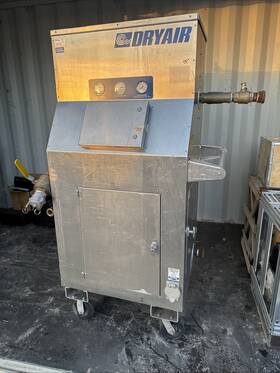
( Brand: Dryair ), ( Manufacturer Part Number: HESF-1000 ), ( Type: Plate Heat Exchanger ), ( Power Source: Steam )
Review DRYAIR Plate Heat Exchanger Glycol Dry Air Hesf 1000 Steam Pressure
The **DryAir HESF-1000** is a high-performance, compact plate heat exchanger designed for efficient heat transfer in industrial and commercial HVAC, refrigeration, and process heating applications. Engineered with precision, this unit combines advanced plate technology with robust construction to deliver exceptional thermal efficiency while minimizing energy consumption. The HESF-1000 is specifically optimized for glycol-based air heating systems, making it ideal for dehumidification, space heating, and freeze protection in air handling units (AHUs), ventilation systems, and industrial processes. Its modular plate design ensures a large surface area for optimal heat exchange, allowing for rapid and consistent temperature regulation between the glycol circuit and the air stream. The unit is built to handle high-volume airflow while maintaining low pressure drops, ensuring energy savings and operational reliability.
For applications requiring steam integration, the **HESF-1000** can be seamlessly paired with a steam coil or indirect steam heating system, providing flexibility for both hot water and steam-based thermal management. The unit is constructed from high-grade stainless steel plates, ensuring corrosion resistance, durability, and long-term performance even in demanding environments. Its compact footprint allows for easy installation in tight spaces, making it suitable for retrofitting existing systems or integrating into new builds without compromising efficiency. The HESF-1000 is equipped with a robust gasket system to prevent leaks and maintain system integrity under varying operating conditions, including high-pressure glycol and steam applications.
Designed with operational efficiency in mind, the **HESF-1000** features a balanced plate arrangement that maximizes heat transfer while minimizing fouling and scaling risks. Its robust mounting system ensures stability, and the unit is engineered to withstand operating pressures up to **10 bar (145 psi)**, making it suitable for both low-pressure and moderate-pressure glycol and steam circuits. The heat exchanger s modular design also allows for easy maintenance, with plates accessible for cleaning or replacement without dismantling the entire unit. Whether used in commercial buildings, industrial facilities, or specialized HVAC systems, the **DryAir HESF-1000** delivers superior thermal performance, energy savings, and operational reliability, making it a versatile solution for demanding heat transfer applications.
**Pros and Cons of buying a DryAir HESF-1000 Plate Heat Exchanger (Glycol/Air or Steam Pressure)**
### **Pros**
1. **High Efficiency** Plate heat exchangers are known for their compact design and superior heat transfer efficiency compared to traditional shell-and-tube exchangers. The HESF-1000 is optimized for glycol-to-air or steam-to-air heat exchange, ensuring minimal energy loss and faster heating/cooling cycles.
2. **Space-Saving Design** The modular plate structure allows for a smaller footprint than conventional heat exchangers, making it ideal for installations where space is limited.
3. **Versatile Applications** Suitable for both glycol-based heating systems (used in industrial drying, air handling, and process heating) and steam-based systems (for high-temperature applications like industrial drying, sterilization, or space heating).
4. **Durable Construction** Made with corrosion-resistant materials (likely stainless steel or coated plates), the HESF-1000 is designed for long-term reliability in demanding environments.
5. **Adjustable Performance** The plate configuration can be customized to match specific thermal requirements, allowing for optimal heat transfer rates without excessive pressure drops.
6. **Energy Savings** By maximizing heat recovery, the unit reduces fuel or energy consumption, leading to lower operational costs over time.
7. **Easy Maintenance** Plate heat exchangers are generally easier to clean and service compared to large, sealed systems. Plates can be disassembled for cleaning or replacement if needed.
8. **Quiet Operation** When paired with proper air handling systems, the unit typically operates with minimal noise, which is beneficial for indoor or sensitive applications.
9. **Scalability** Additional plates or units can be added to increase capacity if future expansion is required.
10. **Compatibility with Automation** Works well with modern control systems, allowing for precise temperature regulation and integration into larger HVAC or industrial processes.
---
### **Cons**
1. **Higher Initial Cost** Plate heat exchangers generally have a higher upfront price compared to traditional shell-and-tube or finned-tube exchangers, though the long-term efficiency gains may offset this.
2. **Pressure Drop Considerations** The compact design can lead to higher pressure drops in the air or fluid side, requiring stronger fans or pumps to maintain airflow/fluid flow, which may increase energy consumption.
3. **Fragility in Improper Handling** Plate heat exchangers are sensitive to mechanical damage (e.g., plate bending or misalignment). Improper installation or maintenance could reduce efficiency or cause leaks.
4. **Limited Temperature Range (for Glycol Systems)** If using glycol, the maximum operating temperature may be lower than steam-based systems, restricting use in high-temperature applications.
5. **Leak Risk** Gaskets in plate heat exchangers can degrade over time, leading to leaks if not properly maintained. This requires regular inspections, especially in corrosive environments.
6. **Specialized Installation Requirements** Proper alignment, sealing, and support structures are necessary to prevent vibration or plate distortion, which may require skilled labor.
7. **Fouling Susceptibility** If the glycol or air contains contaminants (e.g., dirt, scale, or biological growth), the plates can foul over time, reducing efficiency unless cleaned regularly.
8. **Limited Customization for Extreme Conditions** While adjustable, the HESF-1000 may not be ideal for extreme high-pressure or highly corrosive applications without additional modifications.
9. **Dependence on Fluid Quality** Poor-quality glycol or steam can accelerate wear on the plates and gaskets, increasing maintenance needs.
10. **Potential for Higher Maintenance Costs** While generally low-maintenance, the need for periodic cleaning, gasket replacement, and system checks could add to long-term operational expenses.
---
### **Ending Conclusion**
The **DryAir HESF-1000 plate heat exchanger** is a high-performance, efficient solution for glycol-to-air or steam-to-air heat transfer applications. Its compact design, energy savings, and versatility make it a strong choice for industrial drying, HVAC systems, or process heating where space and efficiency are priorities. However, the higher initial cost, potential maintenance challenges, and sensitivity to installation quality must be carefully considered.
For **glycol-based systems**, it excels in moderate-temperature applications with clean fluids. For **steam-based systems**, it is well-suited for high-temperature drying or heating but may require additional pressure handling components. If properly installed, maintained, and matched to the application s requirements, the HESF-1000 can deliver significant long-term savings and reliability.
---
### **Recommendation**
**Buy the HESF-1000 if:**- You need a **space-efficient, high-efficiency** heat exchanger for glycol or steam applications.
- Your system requires **precise temperature control** with minimal energy waste.
- You can **commit to regular maintenance** (cleaning, gasket checks) to ensure longevity.
- The **upfront cost** is justified by long-term operational savings and performance benefits.
- Your application involves **moderate to high airflow rates** where plate heat exchangers perform best.
**Avoid or reconsider if:**- You are working with **extremely high pressures, corrosive fluids, or abrasive particles** without additional protective measures.
- Your budget is **strictly cost-sensitive**, as the initial investment may be higher than traditional exchangers.
- The system will operate in **uncontrolled environments** where plates could be damaged (e.g., frequent mechanical stress).
- You lack **experienced personnel** to handle installation and maintenance properly.
**Alternative Considerations:**- If steam pressure is a critical factor, verify the HESF-1000 s compatibility with your steam supply specifications (pressure, purity).
- For very large-scale applications, assess whether multiple smaller units or a hybrid system (e.g., plate finned-tube) would be more cost-effective.
- Consult with **DryAir or a certified installer** to confirm the unit s suitability for your specific glycol/steam quality and flow rates.
**Final Verdict:** The HESF-1000 is a **strong, well-engineered choice** for most industrial heat transfer needs where efficiency and compactness are key. With proper care, it can outperform traditional exchangers in terms of performance and energy savings. However, thorough planning for installation, maintenance, and fluid quality is essential to avoid downsides.
Details:
Condition is Used. Dryair HESF1000 Plate Heat Exchanger Glycol Dry Air HESF 1000 Steam Pressure.
part #: hesf1000 price
- $4999.00
specifications indheatexchanger:
- brand: Dryair
- mpn: Hesf-1000
- type: Plate Heat Exchanger
- power source: Steam
seller indheatexchanger:
- city: Elkhart Lake, Wisconsin
- # reviews: 3622
- rating: 98.9%
payments indheatexchanger:
- other
- cash
- credit card: Visa
- wallet: Google-pay
general indheatexchanger:
- condition: Used
- HVAC Refrigeration > HVAC Refrigeration Components > Heat Exchangers
shipping indheatexchanger:
- service: Flat Rate Freight
- type: Fixed
- class: Freight
- cost: $199.00
offer indheatexchanger:
- availability: In Stock
- options: Ship-to-home
- sold: 0
- quantity: 2
- started: May 10, 2026
returns indheatexchanger:
- paid by: Buyer
- policy: Returns Accepted
- time: 14 Days
- method: Money back