KELVION GBS525M-24 Gbs Brazed Plate Heat Exchanger
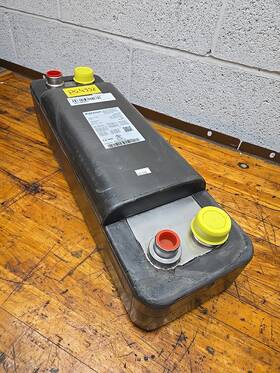
( Brand: Kelvion ), ( Manufacturer Part Number: GBS525M-24 ), ( Model: 525M-24 ), ( Type: Plate Heat Exchanger )
Review KELVION Gbs Brazed Plate Heat Exchanger
The **Kelvion GBS 525M-24 Brazed Plate Heat Exchanger** is a high-performance, compact thermal solution engineered for demanding industrial, HVAC, and refrigeration applications where efficiency, reliability, and space optimization are critical. Part of Kelvion s renowned **GBS series**, this unit combines advanced brazed plate technology with a robust, corrosion-resistant design to deliver exceptional heat transfer performance in a compact footprint. The **525M-24** model features a **525 mm plate width** and **24 plates**, providing a balanced capacity for medium to high-flow applications while maintaining a compact form factor ideal for installations where space is limited. Constructed from **high-grade stainless steel (typically 1.4404 or 1.4541)**, the heat exchanger ensures superior resistance to corrosion, scaling, and chemical degradation, making it suitable for a wide range of fluids, including water, glycol mixtures, refrigerants, and mild acids or alkalis. The **brazed plate design** eliminates the need for gaskets, reducing maintenance requirements and minimizing the risk of leaks, while the **turbulent flow channels** between plates maximize heat transfer efficiency by enhancing fluid dynamics and reducing fouling.
This heat exchanger is particularly well-suited for applications such as **chilled water systems, district heating/cooling networks, industrial process cooling, and HVAC units**, where precise temperature control and energy savings are essential. The **modular and scalable design** allows for easy integration into existing systems, with connection options including **flanged or threaded ports** (depending on the variant) to accommodate various piping configurations. The **compact plate arrangement** ensures a high surface area-to-volume ratio, optimizing thermal performance without compromising structural integrity. Additionally, Kelvion s **patented plate geometry** featuring optimized corrugation patterns minimizes pressure drop while maximizing heat transfer, contributing to lower operational costs and improved energy efficiency. Whether deployed in **commercial buildings, data centers, or industrial facilities**, the GBS 525M-24 delivers consistent, high-performance heat exchange with minimal maintenance, making it a cost-effective and durable choice for modern thermal management needs.
### **Pros and Cons of buying a Kelvion GBS525M-24 (Braised Plate Heat Exchanger)**
#### **Pros**
1. **High Efficiency and Compact Design**
The Kelvion GBS525M-24 is a brazed plate heat exchanger (BPHE) known for its high thermal efficiency. The compact design allows for a smaller footprint compared to shell-and-tube exchangers, making it ideal for space-constrained applications. The large surface area provided by the corrugated plates enhances heat transfer, reducing energy consumption and operational costs.
2. **Corrosion Resistance**
Kelvion BPHEs are typically constructed from materials like stainless steel (e.g., 1.4435, 1.4571), which offers excellent resistance to corrosion, scaling, and fouling. This extends the lifespan of the unit and reduces maintenance requirements, particularly in applications involving aggressive fluids or varying pH levels.
3. **Versatility in Applications**
The GBS525M-24 is suitable for a wide range of industries, including HVAC, refrigeration, food and beverage processing, pharmaceuticals, and industrial cooling systems. Its modular design allows for customization of flow rates, temperatures, and pressure ratings to match specific process requirements.
4. **Low Maintenance and Durability**
Brazed plate heat exchangers generally require less maintenance than welded or shell-and-tube designs. The absence of gaskets (in sealed designs) reduces leakage risks, and the robust construction minimizes wear over time. Kelvion s reputation for quality ensures reliable performance with proper installation and operation.
5. **Energy Savings**
Due to its efficient heat transfer capabilities, the unit can reduce energy consumption by optimizing temperature differentials between hot and cold fluids. This is particularly beneficial in large-scale or continuous-process applications where energy costs are a significant factor.
6. **Quick Installation and Modularity**
The compact and modular nature of BPHEs simplifies installation compared to traditional heat exchangers. Plates can be easily replaced or upgraded if needed, and the unit can be integrated into existing systems with minimal modifications.
7. **Environmental Benefits**
By improving energy efficiency and reducing operational waste, the GBS525M-24 contributes to lower greenhouse gas emissions and resource consumption, aligning with sustainability goals in industrial settings.
---
#### **Cons**
1. **Limited Pressure and Temperature Ratings**
While the GBS525M-24 is robust, brazed plate heat exchangers generally have lower maximum pressure and temperature ratings compared to shell-and-tube exchangers. For example, some BPHEs may not be suitable for extremely high-pressure applications (e.g., above 30 bar) or high-temperature processes (e.g., above 200 C), depending on the material. Always verify the unit s specifications against your application s requirements.
2. **Fouling Sensitivity**
Although BPHEs are less prone to fouling than shell-and-tube exchangers, they can still be affected by particulate matter, biological growth, or chemical deposits in the fluids. Regular cleaning and pre-treatment of fluids may be necessary to maintain efficiency, adding to operational overhead.
3. **Higher Initial Cost**
Brazed plate heat exchangers often have a higher upfront cost than shell-and-tube units, particularly for custom or high-performance models like the GBS525M-24. However, this is often offset by long-term energy savings and lower maintenance costs.
4. **Plate Leakage Risk (If Not Sealed)**
While sealed BPHEs (e.g., those with welded plates) eliminate leakage risks, some designs rely on brazing or gaskets, which can fail over time if not properly maintained. This risk is mitigated in Kelvion s designs due to their quality standards, but it remains a consideration for less robust units.
5. **Limited Suitability for Highly Abrasive Fluids**
The corrugated plates in BPHEs are designed for efficient heat transfer but may be susceptible to erosion or damage from highly abrasive fluids (e.g., slurries or particulate-laden liquids). In such cases, alternative designs (e.g., tube-and-shell) may be more appropriate.
6. **Complexity in Customization**
While modularity is an advantage, customizing a BPHE for specific flow rates or temperature profiles may require engineering expertise. Users may need to consult with Kelvion or a specialist to ensure the unit is correctly sized and configured for their application.
7. **Potential for Plate Damage During Installation**
Improper handling or installation (e.g., bending plates or mishandling during assembly) can lead to damage, reducing efficiency or causing leaks. Proper training and adherence to installation guidelines are essential.
---
### **Conclusion**
The **Kelvion GBS525M-24** is a high-performance brazed plate heat exchanger that excels in applications requiring compact design, energy efficiency, and corrosion resistance. Its advantages such as superior heat transfer, low maintenance, and versatility make it a strong choice for industries like HVAC, food processing, and refrigeration. However, its limitations, including pressure and temperature constraints, sensitivity to fouling, and higher initial cost, must be carefully considered. If your application demands high efficiency, space savings, and reliable performance within the unit s specified operating range, the GBS525M-24 is a worthwhile investment. Conversely, if your process involves extremely high pressures, abrasive fluids, or requires a more traditional design, alternative heat exchanger technologies may be more suitable.
---
### **Recommendation**
**Buy the Kelvion GBS525M-24 if:**- Your application requires a compact, high-efficiency heat exchanger with minimal maintenance.
- The fluids involved are non-abrasive and compatible with the unit s material (e.g., stainless steel).
- Your system operates within the unit s pressure and temperature limits (verify with Kelvion s specifications).
- Long-term energy savings and operational cost reductions are priorities.
- You can justify the higher upfront cost with the unit s performance benefits.
**Consider alternatives (e.g., shell-and-tube or welded plate exchangers) if:**- Your process involves very high pressures, temperatures, or abrasive fluids.
- You require a design with inherently higher pressure ratings or greater mechanical robustness.
- Budget constraints make the initial cost prohibitive without clear long-term savings.
**Additional Steps Before Purchase:**1. **Consult Kelvion s Technical Support:** Ensure the GBS525M-24 meets your exact flow, temperature, and pressure requirements.
2. **Assess Fluid Compatibility:** Confirm that the fluids in your system are compatible with the exchanger s materials to avoid corrosion or fouling.
3. **Evaluate Installation and Maintenance Plans:** Train personnel on proper handling and cleaning procedures to maximize the unit s lifespan.
4. **Compare Total Cost of Ownership (TCO):** Factor in energy savings, maintenance costs, and potential downtime to determine long-term value.
For most applications where efficiency and space are critical, the **Kelvion GBS525M-24 is a recommended choice**, provided its specifications align with your operational needs.
Details:
Condition is New. Shipped with USPS Ground Advantage. Kelvion GBS 525M-24 Brazed Plate Heat Exchanger.
part #: gbs525m24 price
- $399.99
specifications indheatexchanger:
- brand: Kelvion
- mpn: Gbs525m-24
- model: 525m-24
- type: Plate Heat Exchanger
general indheatexchanger:
- condition: New
- HVAC Refrigeration > HVAC Refrigeration Components > Heat Exchangers
returns indheatexchanger:
- policy: Returns Accepted
- method: Money back
- time: 30 Days
- paid by: Buyer
seller indheatexchanger:
- rating: 99.7%
- # reviews: 2186
- city: Carol Stream, Illinois
payments indheatexchanger:
- wallet: Google-pay
- credit card: Mastercard
- other
offer indheatexchanger:
- options: Ship-to-home
- quantity: 1
- best offers: True
- sold: 0
- started: March 14, 2026
- availability: In Stock
shipping indheatexchanger:
- class: Standard
- service: USPS Ground Advantage
- cost: $49.99
- carrier: USPS
- type: Fixed
- transit: 4-9 Days
Kelvion GBS525M-24 Is Similar To:
- Kelvion 400h-50 Type Gml Heat Exchanger 13 Inch X 4.75 5 321 F To 392 2015 (42.1% similar) This Kelvion type GL 400H-50 heat exchanger is a reliable and efficient component for your hvac refrigeration system. This heat exchanger is ideal for use in various industries such as business and industrial settings. The exchanger is constructed with high-quality materials and suitable for a wide ...(July 31st, 2024)
- Kelvion 400h-x-28 Gbs 100254185 Plate Heat Exchanger Used Free Shipping (60.5% similar) The plate heat exchanger is a working pull and will come as pictured. You are buying a used Kelvion gbs 400H-X-28 100254185 plate heat exchanger...(July 31st, 2024)
- Kelvion Gbe400h-60 Brazed Plate Heat Exchanger Gbs42cl-10 1003533464 (63.5% similar) Fast free shipping and handling to the continuous 48 states. New - open box, Kelvion brazed plate heat exchanger GBS42CL-10, manufacture date 2022 , back cover plastic missing on left side...(September 18th, 2024)
- Kelvion 200h-44 Gbs 100648799 Plate Heat Exchanger New (67.9% similar) Our primary goal is to satisfy the customer while remaining a profitable growing business. Company profile, renascent buys and sells industrial electronic equipment for use in the manufacturing world...(September 20th, 2024)
- Kelvion 100094312 Brazed Plate Heat Exchanger Wp 22-34 31 Bar 450 Psi (59.8% similar) Part #: Kelvion 100094312 for sale...(September 22nd, 2024)
- Kelvion 100070677 Brazed Plate Heat Exchanger Wp 22-34 450 Psi New In Box (54.1% similar) Bought, but never used...(October 3rd, 2024)
- Kelvion Ch7-1 2 100098689 Plate Heat Exchanger (61.5% similar) Model: CH7-1/2 100098689. Knife gate valves. Check valves. Valve bodies and manifolds. Heating and cooling. Tool storage...(October 6th, 2024)
- Kelvion Fp10x20-200 New Copper Brazed Ss 200 Plate Heat Exchanger Made In Usa (60.7% similar) 10X20 200 plate brazed copper stainless steel. Max.allow press. Type: FP10X20-200 2-1/2 mot. Min allow temp. Material number: 100286280. Max allow temp. New Kelvion copper brazed SS refrigerant plate heat exchanger made in USA FP10X20-200 2-1/2 mot...(January 12th, 2025)
- Kelvion 400h-40 Brazed Plate Heat Exchanger Gbs 400h-60 And Used Unit (61.4% similar) Type #: gbs 400H-60. Includes used Kelvion unit. Questions: Russ...(February 13th, 2025)
- Kelvion 400h-ae-30 New 100236926 Plate Heat Exchanger Gbs Free Ship (52% similar) Each purchase is for one. Please see all pics. New units, some boxes were opened for inspection...(February 21st, 2025)
- Kelvion Gbs400h-ae-24 31 Bar 450psi Brazed Plate Heat Exchanger (74.4% similar) Items marked as: for parts or repair /or as is are not covered by the 30 day warranty. This specifically applies to items marked as: new, new open box and used these are covered by our 30 day warranty. India Pakistan...(February 26th, 2025)