SPERRE ES.219.1800.VV.25 Heat Exchanger
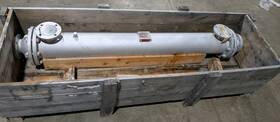
( Brand: Sperre ), ( Manufacturer Part Number: ES.219.1800.VV.25 ), ( Model: .219.1800 ), ( Type: Shell Tube Heat Exchanger ), ( Country Of Origin: United States )
Review SPERRE New Heat Exchanger
The **Sperre ES.219.1800.VV.25** is a high-performance, compact heat exchanger designed for demanding industrial applications where efficiency, durability, and precision are paramount. Part of Sperre s advanced line of shell-and-tube heat exchangers, this model combines cutting-edge engineering with robust construction to deliver exceptional thermal transfer capabilities in environments where space optimization and reliability are critical. Featuring a **1,800 mm shell diameter**, this unit is engineered to handle high-flow applications with minimal pressure drop, making it ideal for processes such as refrigeration, HVAC systems, chemical processing, and oil & gas operations. The **VV.25** designation indicates a specialized design optimized for **vertical installation**, ensuring stable operation even under high thermal loads while reducing maintenance downtime.
The heat exchanger employs a **double-pipe or shell-and-tube configuration** (depending on specific application needs) with precision-machined tubes and a reinforced shell, constructed from materials such as **stainless steel (e.g., AISI 316L or duplex grades)** or **carbon steel with protective coatings** to resist corrosion, scaling, and thermal fatigue. This ensures longevity in aggressive environments, including those exposed to seawater, brine, or corrosive chemicals. The **ES.219** series incorporates **optimized baffle systems** and **turbulence promoters** to maximize heat transfer efficiency while minimizing fouling, a key advantage in industries where cleanliness and performance consistency are non-negotiable. The **25** in the model number may also reference a specific tube pitch or pass configuration, further enhancing its adaptability to varying thermal and hydraulic demands.
For enhanced operational flexibility, the **Sperre ES.219.1800.VV.25** is equipped with **modular design features**, allowing for easy customization of tube bundle configurations, gasket materials, and connection types (e.g., ANSI, DIN, or custom flanges). This modularity ensures seamless integration into existing systems, whether in a new plant setup or a retrofit scenario. Additionally, the unit is engineered to comply with **international standards** such as ASME, PED, and API, ensuring compliance with rigorous safety and performance regulations. Its **compact footprint** and **high thermal efficiency** make it particularly suited for applications where space is limited but performance cannot be compromised, such as in offshore platforms, marine systems, or industrial cooling loops.
Beyond its technical specifications, the **Sperre ES.219.1800.VV.25** reflects Sperre s commitment to **sustainability and energy efficiency**, with designs that minimize energy waste and operational costs. Its **low-maintenance construction** reduces the need for frequent inspections or replacements, contributing to extended equipment lifespan and reduced total cost of ownership. Whether deployed in a **refrigeration cycle, heat recovery system, or process cooling application**, this heat exchanger delivers **consistent, high-performance thermal management** with minimal operational overhead. For industries where reliability and precision are critical, the **Sperre ES.219.1800.VV.25** stands as a testament to engineering excellence combining innovation with the durability required to meet the most exacting operational challenges.
### Pros and Cons of buying a Sperre ES.219.1800.VV.25 Heat Exchanger
The **Sperre ES.219.1800.VV.25** is a plate heat exchanger designed for industrial applications, particularly in HVAC, refrigeration, and process heating/cooling systems. Below is a detailed analysis of its advantages and disadvantages.
---
### **Pros**
1. **High Efficiency**
The plate heat exchanger design maximizes heat transfer due to its large surface area and thin metal plates, which allows for rapid and efficient heat exchange. This results in energy savings compared to traditional shell-and-tube exchangers.
2. **Compact Size**
Plate heat exchangers are significantly smaller and lighter than shell-and-tube units, making them ideal for installations where space is limited. This can reduce installation costs and simplify system layout.
3. **Versatility in Applications**
The ES.219.1800.VV.25 model is likely designed for a range of fluids, including water, glycol mixtures, and refrigerants, depending on the material construction (e.g., stainless steel, titanium, or other alloys). This versatility makes it suitable for HVAC, chilled water systems, and industrial processes.
4. **Modular Design**
Plate heat exchangers can be easily expanded or reconfigured by adding or removing plates, allowing for adjustments to capacity without replacing the entire unit. This flexibility is beneficial for systems with variable load demands.
5. **Low Maintenance**
Plate heat exchangers typically require less maintenance than shell-and-tube units. Gaskets can be replaced without dismantling the entire unit, and the design minimizes fouling due to the smooth surfaces and self-cleaning properties of the plates.
6. **Quick Response Time**
The compact design and efficient heat transfer result in faster heating or cooling cycles, which can improve system performance and responsiveness.
7. **Corrosion Resistance (Depending on Material)**
If constructed from materials like stainless steel or titanium, the ES.219.1800.VV.25 can withstand corrosive fluids, extending the lifespan of the unit and reducing the need for frequent replacements.
8. **Lower Initial Cost (Compared to Some Alternatives)**
While the upfront cost may be higher than traditional radiators or some shell-and-tube units, plate heat exchangers often offer long-term savings due to their efficiency and durability.
9. **Environmental Benefits**
By improving energy efficiency, plate heat exchangers reduce the overall energy consumption of the system, leading to lower greenhouse gas emissions.
10. **Quiet Operation**
Plate heat exchangers generally operate more quietly than other types of heat exchangers, which can be advantageous in applications where noise is a concern.
---
### **Cons**
1. **Higher Initial Cost**
The upfront cost of a plate heat exchanger like the ES.219.1800.VV.25 can be higher than that of traditional radiators or some shell-and-tube units, particularly if high-grade materials (e.g., titanium) are used.
2. **Pressure Limitations**
Plate heat exchangers typically have lower pressure ratings compared to shell-and-tube units. The ES.219.1800.VV.25 may not be suitable for high-pressure applications (e.g., steam systems or certain industrial processes) without additional reinforcement or a different design.
3. **Gasket Reliance**
The performance and longevity of the unit depend heavily on the gaskets sealing the plates. Gaskets can degrade over time, leading to leaks, which may require maintenance or replacement. Poor-quality gaskets can compromise the efficiency of the exchanger.
4. **Fragility**
Plate heat exchangers are more susceptible to mechanical damage, such as plate deformation or cracks, due to their thin construction. This can occur if the unit is subjected to excessive pressure, vibration, or improper handling during installation.
5. **Limited Temperature Range**
While plate heat exchangers are efficient, they may not perform as well in extreme temperature applications (e.g., very high-temperature steam or cryogenic fluids) without specialized materials or designs.
6. **Cleaning Challenges**
Although plate heat exchangers are generally easier to clean than shell-and-tube units, scaling or fouling can still occur. The compact design may make access for cleaning more difficult compared to larger units.
7. **Potential for Plate Leaks**
Over time, plates can develop leaks at the welds or gaskets, especially if the unit is subjected to thermal cycling or pressure fluctuations. This can lead to performance degradation or system contamination.
8. **Limited Lifespan in Harsh Environments**
In environments with highly abrasive or corrosive fluids, the lifespan of the unit may be shorter than expected, even with high-quality materials. Regular inspections and maintenance are essential.
9. **Installation Complexity**
While plate heat exchangers are compact, their installation can be more complex than that of simpler radiators. Proper alignment, gasket placement, and pressure testing are critical to ensure optimal performance.
10. **Vendor Dependency**
Plate heat exchangers often require specialized knowledge for installation, maintenance, and repair. This can create dependency on the manufacturer or authorized service providers, which may increase long-term costs.
---
### **Conclusion**
The **Sperre ES.219.1800.VV.25** plate heat exchanger is a highly efficient and compact solution for applications where space, energy savings, and responsiveness are priorities. Its modular design, low maintenance requirements, and versatility make it an attractive choice for HVAC, refrigeration, and industrial processes provided the operating conditions align with its capabilities.
However, its suitability depends on the specific requirements of your system. If your application involves high pressures, extreme temperatures, or highly corrosive fluids, alternative designs (e.g., reinforced plate exchangers or shell-and-tube units) may be more appropriate. Additionally, the higher initial cost and reliance on gaskets and proper installation must be carefully considered.
---
### **Recommendation**
**Buy the Sperre ES.219.1800.VV.25 if:**- You require a space-efficient, energy-saving heat exchanger for moderate to high-flow applications.
- Your system operates within the pressure and temperature limits of the unit (typically up to 25 bar and temperatures suitable for the material).
- Maintenance and potential gasket replacements can be managed proactively.
- The long-term energy savings justify the higher upfront cost.
**Consider alternatives if:**- Your application involves high-pressure or extreme-temperature conditions.
- The system requires minimal maintenance or has limited access for servicing.
- The initial cost is a significant constraint, and a less expensive but less efficient unit (e.g., a radiator or basic shell-and-tube exchanger) could suffice.
- The fluids in your system are highly abrasive or corrosive, and you are unsure about the longevity of the unit.
**Final Suggestion:**Before purchasing, consult with a thermal engineering specialist or the manufacturer to confirm that the ES.219.1800.VV.25 meets your exact operational requirements. Additionally, ensure that your installation team has experience with plate heat exchangers to avoid common pitfalls like improper gasketing or plate damage. If possible, request a trial or pilot test to validate performance in your specific application.
Details:
Tube length -67-1/2. Not the right part. No long wait times and absolutely no price gouging. New Sperre ES.219.1800.VV.25 Heat Exchanger.
Top ports are 61 apart to and have a 7-1/4 diameter flange. Not the right size. Side ports have a 7-1/4 diameter flange.
part #: es2191800vv25 price
- $2999.00
specifications indheatexchanger:
- brand: Sperre
- mpn: Es.219.1800.vv.25
- model: .219.1800
- type: Shell Tube Heat Exchanger
- country of origin: United States
payments indheatexchanger:
- credit card: Diners-club
- other
- check
- cash
- wallet: Google-pay
- money order
shipping indheatexchanger:
offer indheatexchanger:
- started: April 10, 2026
- quantity: 1
- availability: In Stock
- sold: 0
- options: Ship-to-home
- best offers: True
general indheatexchanger:
- condition: New Open box
- HVAC Refrigeration > HVAC Refrigeration Components > Heat Exchangers
returns indheatexchanger:
- time: 30 Days
- paid by: Buyer
- method: Money back
- policy: Returns Accepted
seller indheatexchanger:
- # reviews: 18506
- rating: 99.9%
- city: New Paris, Indiana
Sperre ES.219.1800.VV.25 Is Similar To:
- Sperre 152.1500.vd.11 New Ev Heat Exchanger (79.1% similar) Tube diameter - new Sperre Eva 152.1500.VD.11 heat exchanger. No long wait times and absolutely no price gouging. length of tube - 56. Capacity 500...(April 3rd, 2026)
- Sperre 152.1500.vh.11 New Es Heat Exchanger (79.1% similar) New Sperre es 152.1500.VH.11 heat exchanger. No long wait times and absolutely no price gouging. Tube diameter - tube length - 56. Capacity 500...(April 3rd, 2026)