STANDARD XCHANGE BP415-040 Plate Heat Exchanger 568605040003
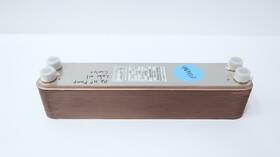
( Brand: Standard Xchange ), ( Manufacturer Part Number: BP415-040 ), ( Part Type: Heat Plate ), ( Model Number: Bp415-040 568605040003 ), ( Reference Sku: 1762878 ), ( Product Condition: New Other )
Review STANDARD XCHANGE Plate Heat Exchanger
The **Standard Xchange BP415-040 (568605040003) Plate Heat Exchanger** is a high-performance, compact thermal transfer system designed for efficient and reliable heat exchange in industrial, HVAC, and process applications. This unit belongs to the BP series, renowned for its robust construction and superior heat transfer capabilities, making it ideal for medium to large-scale operations where space efficiency and thermal efficiency are critical. The BP415-040 model features a **40-plate configuration**, which optimizes the heat transfer surface area while maintaining a compact footprint, allowing for seamless integration into existing systems without excessive floor space requirements. Constructed from **high-grade stainless steel (typically 316L or 304)**, the plates are precision-engineered with a **chevron pattern gasket**, ensuring minimal pressure drop and maximum turbulence to enhance heat transfer efficiency. This design reduces fouling and scaling, prolonging the operational lifespan of the exchanger and minimizing maintenance downtime.
The BP415-040 is equipped with a **pusher-type frame**, which allows for easy plate removal and cleaning, facilitating routine maintenance and inspection without disassembling the entire unit. The robust frame also accommodates a wide range of operating pressures and temperatures, typically up to **25 bar (360 psi) and 200 C (392 F)**, depending on the specific material and gasket specifications, making it suitable for applications such as chilled water systems, district heating, refrigeration circuits, and industrial process cooling. The unit s **modular design** ensures flexibility, allowing for easy expansion or modification to meet evolving operational demands. Additionally, the **gasketed plate design** provides a secure seal, preventing cross-contamination between the hot and cold fluids while maintaining operational integrity under varying thermal and pressure conditions.
Beyond its technical specifications, the BP415-040 excels in energy efficiency, reducing operational costs by minimizing heat loss and optimizing thermal performance. Its compact yet powerful design is particularly advantageous in facilities where space is at a premium, such as commercial buildings, data centers, or manufacturing plants. The unit s reliability and durability further contribute to its appeal, as it is engineered to withstand continuous operation with minimal wear, ensuring long-term cost savings and reduced maintenance overhead. Whether deployed in a new installation or as a replacement for an aging system, the BP415-040 delivers a balance of performance, efficiency, and practicality, making it a versatile and dependable choice for a wide array of thermal management applications.
### **Pros and Cons of buying a Standard Xchange BP415-040 (568605040003) Plate Heat Exchanger**
#### **Pros**
1. **High Efficiency** Plate heat exchangers (PHEs) like this model are known for their superior heat transfer efficiency compared to shell-and-tube exchangers. The compact design maximizes surface area, reducing energy consumption and operational costs.
2. **Space-Saving Design** The modular and compact structure of plate heat exchangers allows for installation in tight spaces, making them ideal for applications where floor area is limited.
3. **Versatility** This unit is likely designed for a wide range of applications, including HVAC, industrial process heating/cooling, food and beverage processing, and chemical processing. Its flexibility makes it suitable for various fluids, including water, oils, and even corrosive or viscous liquids (depending on material).
4. **Quick Installation and Maintenance** Plate heat exchangers are easier and faster to install than traditional shell-and-tube units. They can also be disassembled and cleaned or replaced more easily, reducing downtime.
5. **Energy Savings** Due to their high efficiency, they require less energy to achieve the desired temperature transfer, leading to lower operational costs over time.
6. **Scalability** Additional plates can be added or removed to adjust capacity, allowing the system to grow or adapt to changing demands without requiring a complete replacement.
7. **Corrosion Resistance (if using appropriate materials)** The BP415 series is likely constructed with materials such as stainless steel (e.g., 316L), which offers excellent resistance to corrosion, extending the unit s lifespan in harsh environments.
8. **Low Thermal Inertia** Plate heat exchangers respond quickly to temperature changes, making them suitable for applications requiring rapid adjustments (e.g., temperature control in food processing).
9. **Environmental Benefits** Their efficiency reduces energy consumption, contributing to lower greenhouse gas emissions compared to less efficient heat exchange systems.
10. **Cost-Effective for Medium to Large Applications** While the initial cost may be higher than some smaller heat exchangers, the long-term savings in energy, maintenance, and space make it cost-effective for medium to large-scale operations.
---
#### **Cons**
1. **Higher Initial Cost** Plate heat exchangers typically have a higher upfront cost compared to shell-and-tube units, especially for large capacities. This may be a barrier for budget-constrained projects.
2. **Pressure Limitations** Plate heat exchangers generally have lower pressure ratings than shell-and-tube exchangers. The BP415-040 may not be suitable for high-pressure applications (e.g., steam systems or high-pressure industrial processes) without additional reinforcement or a different design.
3. **Leak Risk** The gasket-sealed design of plate heat exchangers can be prone to leaks if gaskets degrade or are improperly installed. Regular inspection and maintenance are required to prevent leaks, which could lead to downtime or contamination.
4. **Limited Lifespan with Abrasive or Fouling Fluids** If the fluids being processed contain particulate matter, scale, or abrasive substances, the plates can foul or wear out more quickly, reducing efficiency and requiring more frequent cleaning or replacement.
5. **Material Constraints** While stainless steel is common, some applications may require specialized materials (e.g., titanium for highly corrosive fluids), which can increase costs. The BP415-040 s material may not be suitable for all aggressive environments.
6. **Sensitivity to Plate Damage** Plates can bend or crack if subjected to mechanical stress (e.g., improper handling during installation or maintenance). Damaged plates must be replaced, adding to maintenance costs.
7. **Complexity in Design and Installation** While easier to install than shell-and-tube units, plate heat exchangers require careful alignment, gasket placement, and hydraulic balancing. Poor installation can lead to inefficiencies or failures.
8. **Limited Suitability for High-Temperature Applications** Some plate heat exchangers have temperature limits (e.g., below 200 C or 400 F), depending on the materials used. The BP415-040 may not be ideal for extremely high-temperature processes without modifications.
9. **Vendor Dependency** Plate heat exchangers often require specialized suppliers or manufacturers. Finding compatible replacement parts or maintenance services may be more challenging than for standard shell-and-tube units.
10. **Space Requirements for Large Systems** While more compact than shell-and-tube exchangers, very large plate heat exchanger systems may still require significant space for installation, piping, and support structures.
---
### **Conclusion**
The **Standard Xchange BP415-040 (568605040003)** plate heat exchanger is a high-performance unit well-suited for applications requiring efficient, space-saving, and energy-conscious heat transfer. Its advantages in efficiency, scalability, and maintenance accessibility make it an excellent choice for medium to large-scale industrial, HVAC, or process applications where pressure and temperature constraints are manageable.
However, its higher initial cost, pressure and temperature limitations, and susceptibility to leaks or fouling must be carefully considered. If the application involves high-pressure, high-temperature, or highly abrasive fluids, or if budget constraints are severe, alternative heat exchange technologies (e.g., shell-and-tube or spiral plate exchangers) may be more appropriate.
For most **medium to large applications with moderate pressure and temperature requirements**, where efficiency and long-term cost savings are priorities, the BP415-040 is a **strong recommendation**. Potential buyers should:
- Verify the unit s compatibility with their specific fluids and operating conditions.
- Ensure proper installation and maintenance protocols are in place to mitigate leak risks.
- Compare total cost of ownership (including energy savings and maintenance) against alternatives.
- Confirm availability of spare parts and technical support from the manufacturer or distributor.
If the application aligns well with the unit s capabilities, the BP415-040 is a **reliable and efficient investment**. Otherwise, consulting with a heat exchange specialist to evaluate alternatives may be advisable.
Details:
Model Number:BP415-040 Valve Bodies and Manifolds. Heating and Cooling. Tool storage.
Knife Gate Valves. Check Valves.
part #: bp415040 price
- $1570.25
specifications indheatexchanger:
- brand: Standard Xchange
- mpn: Bp415-040
- part type: Heat Plate
- model number: Bp415-040 568605040003
- reference sku: 1762878
- product condition: New Other
offer indheateXchanger:
- best offers: True
- quantity: 1
- options: Ship-to-home
- availability: In Stock
- sold: 0
- started: April 23, 2026
seller indheateXchanger:
- # reviews: 127562
- rating: 100.0%
- city: Delta, Ohio
general indheateXchanger:
- condition: New Open box
- HVAC Refrigeration > HVAC Refrigeration Components > Heat EXchangers
returns indheateXchanger:
- paid by: Seller
- time: 30 Days
- method: Money back
- policy: Returns Accepted
shipping indheateXchanger:
- transit: 6-6 Days
- service: Standard, Expedited, Overnight
- cost: $0.00
- type: Fixed
- class: Standard, Expedited, One-day
payments indheateXchanger:
- other
- wallet: Google-pay
- credit card: Visa
Standard Xchange BP415-040 Is Similar To:
- Itt 503003014005 Standard S n Bcf Shell And Tube Heat Exchanger New Old Stock (43.8% similar) I have one brand new available for ship right now retails at $1275. 1 not top ports. Shell and tube heat exchanger 3 x 14. Tit Standard s/n...(November 26th, 2023)
- Standard Xchange Sn516003024006 Heat Exchanger Shell And Tube 330k Btu (56.9% similar) btu h oil to water application 56,000 btu h, shell 225 pig, tube 150 pig pressure, temp. btu h water to water application 330,000 btu h, max...(November 27th, 2023)
- Standard Xchange Sn516003014006 Heat Exchanger Shell And Tube 270k Btu (56.9% similar) btu h oil to water application 28,000 btu h, shell 225 pig, tube 150 pig pressure, temp. Power adapters and other modifications may be necessary for proper operation in countries...(December 20th, 2023)
- Standard Xchange Sn503006024005 Xylem Bcf Brass Shell Copper Tube Heat Exchanger (58.6% similar) Tube inlet/outlet SIZE:1-1/2 in. Tube material:copper. Shell material:brass. Knife gate valves. Model: BC Sn shell inlet/outlet SIZE:2 in...(December 24th, 2023)
- Itt Standard 5-030-03-014-301 Bcf 3 Inch X 14 Shell And Tube Heat Exchanger (48.9% similar) After the return period has ended, you can no longer product. We choose the carrier. height : 6 in. Msrp: $399.99. All goods are so as is' and with all faults meaning, without limitation, that. Size: length : 22 in. Your phone number and business name. Next day second air services are available. ...(January 24th, 2024)
- American Standard 5-142-05-048-018 Hcf 4-pass Heat Exchanger Brass Shell 52 Inch L (46.5% similar) And the cost of return shipping. Items in LOT1. Country of manufacture USA. Cast iron end caps. Ask our experts. 2 shell ports. 1 tube ports. Part NUMBER5-142-05-048-018. Condition used...(April 15th, 2024)
- Itt 161711-01 Standard Stainless Shell And Tube Heat Exchanger 150 Psi At 375 (38% similar) Tit Standard 161711-01 shell and tube heat exchanger 150 psi at 375, this stainless shell tube heat exchanger is a reliable tool for hvac refrigeration systems. Designed by tit, it can withstand a pressure of up to 150 psi at 375 degrees. This heat exchanger comes with the valves as seen in picture...(April 15th, 2024)
- Itt Standard 5-142-03-014-001 3 Inch X14 Cast Bronze Heat Exchanger Bcf 300 300psi (46.2% similar) Very clean, lightly used, cast bronze heat exchanger from tit Standard, p/n 5-142-03-014-001. Shell 300 psi f max temp. Tube 150 psi also 300 f max. 3 diameter x 14 long shell...(April 23rd, 2024)
- American Standard 5-030-05-024-005 Bcf Shell And Tube Heat Exchanger (57.8% similar) Tube: max w.p. This item has scratches on it. 300PSI / max. See pictures for visuals. 150PSI / max. This specifically applies to items marked as: new, new open box and used these are covered by our 30 day warranty...(April 29th, 2024)
- Xylem Standard Xchange 516003008006 Sscf Tube Heat Exchanger 1 Each 2466 (58.6% similar) Offer is for one each heat exchanger - nothing else: seals placed. Nothing else, as you see on the pictures...(April 30th, 2024)
- American Standard 5-030-06-024-003 Bcf 2 Pass Tube Heat Exchanger Shaft Dia 6 Inch (53.5% similar) Please see above for details on item condition. Combined shipping on multiple items. Special requests more shipping options. But when available in multiple quantity, the photo shown is representative of item. Special invoicing and/or packaging requests. Whats included. 24 tube length approx 28 ...(May 5th, 2024)