THERMAL TRANSFER PRODUCTS AO-20-S Heat Exchanger 300 400
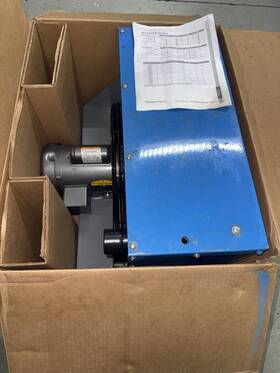
( Brand: Thermal Transfer Products ), ( Manufacturer Part Number: AO-20-S ), ( Type: Heat Exchanger ), ( Color: Blue ), ( Year Manufactured: 2017 )
Review THERMAL TRANSFER PRODUCTS Heat Exchanger Blue 300 Psi 400
The **AO-20-S Thermal Transfer Heat Exchanger (Model 300/400, 2017)** is a high-performance, compact, and versatile industrial heat transfer solution designed for applications requiring precise temperature regulation, efficient energy recovery, or process fluid conditioning. Manufactured with advanced engineering standards, this unit belongs to a series optimized for medium to large-scale operations, offering a robust and reliable method for transferring thermal energy between two distinct fluid streams whether in heating, cooling, or heat recovery systems. The **AO-20-S** series is particularly well-suited for industries such as HVAC, food processing, pharmaceuticals, chemical manufacturing, and renewable energy systems, where consistent thermal performance and durability are critical.
At its core, this heat exchanger employs a **thermal transfer plate design**, featuring a series of corrugated, precision-machined plates that maximize surface area for optimal heat exchange while minimizing pressure drop. The plates are constructed from high-grade **stainless steel (typically 316L or 304)**, ensuring corrosion resistance, longevity, and compatibility with a wide range of fluids, including aggressive chemicals, water, oils, and refrigerants. The **300 and 400** designations likely refer to the unit s capacity or plate configuration with the **300** model accommodating a slightly lower flow rate or smaller footprint, while the **400** variant offers enhanced throughput and thermal efficiency, making it ideal for higher-demand applications. Both versions adhere to the **2017 model year specifications**, incorporating refinements in plate geometry, gasket materials, and structural integrity to improve efficiency, reduce maintenance, and extend operational lifespan.
The **AO-20-S** operates on a **counter-flow or cross-flow principle**, depending on the configuration, which significantly enhances heat transfer efficiency by maintaining a consistent temperature gradient between the hot and cold fluids. This design minimizes thermal losses and ensures that the exiting fluids achieve temperatures closer to each other than in parallel-flow systems, thereby optimizing energy recovery and reducing operational costs. The unit is equipped with **modular plate stacks** that allow for easy disassembly, cleaning, and replacement, reducing downtime and maintenance overhead. Additionally, the **sealing system** incorporates high-performance elastomeric gaskets or welded seals (in high-pressure applications), preventing leaks and ensuring long-term reliability even under fluctuating operating conditions.
For enhanced durability and adaptability, the heat exchanger is built with a **rigid frame structure**, often featuring a **clamp connection system** that securely holds the plate stack in place while allowing for quick access for servicing. The frame is typically constructed from **galvanized steel or stainless steel**, providing resistance to environmental factors and mechanical stress. The **AO-20-S** also supports customization options, such as varying plate materials (e.g., titanium for extreme corrosion resistance), different gasket types (EPDM, NBR, or Viton for compatibility with specific fluids), and optional **integrated temperature sensors or pressure gauges** for real-time monitoring. This flexibility ensures that the unit can be tailored to meet the exact requirements of diverse industrial processes.
In terms of operational efficiency, the **AO-20-S** is engineered to deliver **high heat transfer coefficients**, often exceeding **2,000 4,000 W/m K**, depending on the fluid properties and flow rates. This exceptional performance is achieved through the **turbulent flow** induced by the plate corrugations, which enhances convective heat transfer without requiring excessive pumping energy. The unit s **low thermal inertia** also allows for rapid response to temperature changes, making it ideal for applications where dynamic control is necessary. Furthermore, the compact design of the **AO-20-S** series minimizes installation space requirements while maintaining high efficiency, making it a space-saving alternative to traditional shell-and-tube exchangers in many scenarios.
Safety and compliance are integral to the design of the **AO-20-S**, with adherence to international standards such as **EN 13445 (pressure vessels), ASME Section VIII (for U.S. applications), and PED (Pressure Equipment Directive)**. The unit is rigorously tested for **pressure, temperature, and leak integrity** to ensure it meets or exceeds regulatory and industry-specific requirements. Additionally, the **AO-20-S** is designed with **easy-to-access ports** for fluid connections, allowing for straightforward integration into existing piping systems. Optional features may include **insulation jackets** for thermal retention, **corrosion inhibitors** in fluid circuits, or **automatic drain valves** to prevent scaling and fouling.
Whether deployed in a **large-scale HVAC system** to preheat incoming air, a **pharmaceutical manufacturing plant** for precise temperature control of process fluids, or a **renewable energy facility** for heat recovery from solar thermal or biomass systems, the **AO-20-S Thermal Transfer Heat Exchanger (300/400, 2017)** represents a cutting-edge solution for industries demanding **high efficiency, reliability, and adaptability**. Its combination of advanced thermal transfer technology, modular design, and robust construction makes it a versatile asset for modern industrial applications where energy efficiency and operational excellence are paramount.
### **Pros and Cons of Buying a Thermal Transfer AO-20-S Heat Exchanger (300-400, 2017 Model)**
#### **Pros:**1. **Efficiency in Heat Transfer** The AO-20-S is designed for high-performance heat exchange, making it suitable for applications requiring precise temperature control, such as refrigeration, HVAC, or industrial cooling systems.
2. **Durability and Build Quality** As a 2017 model, it likely incorporates robust materials (e.g., copper tubes, aluminum fins) that are resistant to corrosion and wear, ensuring longevity if properly maintained.
3. **Compatibility with Common Systems** The 300-400 series suggests it is designed for mid-range cooling capacities, making it versatile for small to medium-sized applications like commercial refrigeration, chillers, or air conditioning units.
4. **Energy Efficiency** Modern thermal transfer designs often prioritize efficiency, reducing operational costs over time compared to older or less optimized models.
5. **Aftermarket Availability** Being a well-known brand, replacement parts and technical support may still be accessible, though availability could decline as the model ages.
6. **Proven Reliability** If the unit has a history of consistent performance in similar applications, it may offer dependable operation with minimal downtime.
---
#### **Cons:**1. **Age of the Model (2017)** While not necessarily obsolete, this model is several years old, meaning it may lack newer energy-saving features, digital controls, or advanced diagnostics found in more recent versions.
2. **Potential Obsolescence** Some manufacturers phase out older models, leading to difficulties in finding spare parts, software updates, or technical support as demand shifts to newer technologies.
3. **Lower Energy Efficiency Compared to Modern Standards** Newer heat exchangers often incorporate improved materials and designs that enhance efficiency, potentially reducing long-term operational costs if upgrading is an option.
4. **Compatibility with Modern Systems** If integrating with newer control systems or smart technologies, the AO-20-S may require additional adapters or interfaces, adding complexity and cost.
5. **Warranty Limitations** Older models typically come with shorter or no extended warranties, leaving the buyer responsible for maintenance and repairs beyond basic coverage.
6. **Market Value Depreciation** Used heat exchangers, even in good condition, may depreciate faster than newer models, making them less attractive for resale or trade-in.
---
### **Conclusion:**The AO-20-S heat exchanger (300-400, 2017) is a functional and reliable choice for applications where immediate replacement is needed and budget constraints are a factor. Its durability and efficiency make it a practical option for short-to-medium-term use, particularly in industries where downtime is costly but upgrading is not yet a priority. However, if the goal is long-term cost savings, energy efficiency, or compatibility with modern systems, investing in a newer model may be more advantageous despite the higher upfront cost.
### **Recommendation:** - **Buy if:**- You need a reliable, mid-range heat exchanger for a specific application where newer models are unnecessary.
- The unit is in good condition, with no signs of wear or damage, and you can source replacement parts easily.
- Budget constraints make upgrading impractical at this time.
- **Consider alternatives if:**- You require advanced features like digital controls, higher efficiency, or longer warranties.
- The application demands lower operational costs or compliance with newer energy standards.
- You plan to keep the system for an extended period, as a newer model could save money in the long run.
For optimal decision-making, conduct a cost-benefit analysis comparing the AO-20-S against newer models, factoring in maintenance, energy consumption, and potential resale value. If possible, consult with a specialist to assess whether the unit meets your current and future needs.
Details:
Please review all photos carefully before purchasing. New in box, has some paint scuffed from being shipped original box which is pictured.
part #: ao20 prices
- $750.00-$2718.75
specifications indheatexchanger:
- brand: Thermal Transfer Products
- mpn: Ao-20-s
- type: Heat Exchanger
- color: Blue
- year manufactured: 2017
seller indheatexchanger:
- # reviews: 0
- rating: 0.0%
- city: Decatur, Illinois
returns indheatexchanger:
- policy: No Returns
general indheatexchanger:
- HVAC Refrigeration > HVAC Refrigeration Components > Heat Exchangers
- condition: New Open box
offer indheatexchanger:
- quantity: 1
- started: February 1, 2026
- best offers: True
- sold: 0
- availability: In Stock
- options: Ship-to-home
payments indheatexchanger:
- credit card: Visa
- other
- wallet: Google-pay
shipping indheatexchanger:
- service: Flat Rate Freight
- type: Fixed
- class: Freight
- cost: $100.00
Thermal Transfer Products AO-20 Is Similar To:
- Thermal Transfer Products R-1003-b4-f-z New Shell And Tube Heat Exchanger (60.7% similar) Same day shipping...(December 9th, 2023)
- Emerson P55zzcbk942 P55zzcbk-942 Thermal Transfer Heat Exchanger Aoc-19-1 M Used (42.9% similar) Emerson P55ZZCBK-942 Thermal Transfer heat exchanger AOC-19-1 motor phase...(December 29th, 2023)
- Thermal Transfer Products B-703-b4-f-br 3 4 Inch Heat Exchanger 250 Psi Shell 150 Tube Ttpl Usa (64.7% similar) Although the year of manufacture is unknown, this heat exchanger still a reliable and functional option. The black color gives it a sleek appearance that will fit in with any environment. Please refer to the photos. With a 250 psi shell and 150 tube, this model, B-703-B4-F-BR, is perfect for any ...(January 1st, 2024)
- Thermal Transfer Ha102496793 Ttp Heat Exchanger Ha-1024-96793 500psi Used (55.8% similar) Twp Thermal Transfer heat exchanger HA-1024-96793 500PSI...(January 4th, 2024)
- Thermal Transfer Eks-718-82058 Heat Exchanger 622g54pr7 (60.9% similar) Part #: Thermal Transfer EKS-718-82058 for sale...(January 6th, 2024)
- Thermal Transfer Products Ao-10 Hydraulic Oil Heat Exchanger With 2hp Pump 230 460v (64.5% similar) width : 24 in. Brand: Thermal Transfer Products. Will there be a dock or forklift. We choose the carrier. After the return period has ended, you can no longer product. Condition: used. Your phone number and business name. Local pick-up, prefer to pick it up yourself. Country of manufacture: USA. ...(January 7th, 2024)
- Thermal Transfer Sb-1602-c4-t Steel Shell Copper Tube Exchanger 3 X 2-1 2in Npt (49% similar) Shell material:steel. Knife gate valves. Shell inlet/outlet SIZE:3 in. Tube inlet/outlet SIZE:2-1/2 in. Tube material:copper. Thread type:not...(January 8th, 2024)
- E-tes Mb120 E-tes Electric Thermal Exchanger (29.3% similar) Like new condition...(January 11th, 2024)
- Thermal Transfer Ek-736-t Shell And Tube Heat Exchanger 1-1 2in 3 4in Npt (55.2% similar) Knife gate valves. Circuit breakers. Heating and cooling...(January 19th, 2024)
- Thermal Transfer Eks-718-t Shell And Tube Heat Exchanger 1-1 2in 3 4in (54.9% similar) Circuit breakers. Valve bodies and manifolds. Knife gate valves. Heating and cooling...(January 20th, 2024)
- Thermal Transfer Aa-100-1 250 Psi After Cooler Heat Exchanger 115v 1ph (54.9% similar) Condition: used. We choose the carrier. Next day second air services are available. Removed from a working environment. Need it urgently. width : 28 in. All goods are so as is' and with all faults meaning, without limitation, that. Msrp: $899.99. Local pick-up, prefer to pick it up yourself. Will ...(January 23rd, 2024)