ALFA LAVAL ACH18-10-F Brazed Plate Heat Exchanger Evaporator ACH18-10HF Pricemat
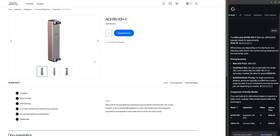
( Brand: Alfa Laval ), ( Manufacturer Part Number: ACH18-10-F ), ( Type: Plate Heat Exchanger ), ( Refrigerant: R-11, R-114, R-12, R-123, R-1234yf, R-12a, R-134a, R-22, R-290, R-401a, R-401b, R-407a )
Review ALFA LAVAL Brazed Plate Heat Exchanger Evaporator Pre owned Pricemat
The Alfa Laval **ACH18-10-F** and **ACH18-10HF** series brazed plate heat exchangers (BHEs) are high-performance, compact thermal solutions designed for demanding industrial applications, including evaporation, condensation, and heat recovery processes. These pre-owned units exemplify Alfa Laval s reputation for precision engineering and efficiency, combining advanced plate design with robust brazing technology to deliver exceptional heat transfer capabilities in a space-saving footprint. The **ACH18-10-F** model features a standard plate configuration optimized for moderate to high-temperature applications, while the **ACH18-10HF** variant incorporates high-flow (HF) plates with enhanced turbulence and reduced pressure drop, making it ideal for systems requiring superior fluid dynamics and energy efficiency. Both units are constructed from corrosion-resistant materials, such as titanium or stainless steel, ensuring longevity and reliability in aggressive environments like food processing, pharmaceuticals, chemical synthesis, or HVAC systems. The brazed plate design eliminates the need for gaskets, reducing maintenance requirements and preventing leaks, while the modular construction allows for easy expansion or modification to accommodate changing process demands. Whether used in a pre-evaporation stage, multi-effect distillation system, or as a heat recovery unit, these heat exchangers excel in applications where thermal efficiency, compactness, and durability are critical. Their pre-owned status presents an opportunity to acquire a high-quality, field-proven unit at a reduced cost, backed by Alfa Laval s legacy of innovation and dependability.
### **Pros and Cons of Buying a Pre-Owned Alfa Laval ACH18-10-F or ACH18-10-HF Brazed Plate Heat Exchanger/Evaporator**
#### **Pros of Purchasing a Pre-Owned Unit**
1. **Cost Savings** New Alfa Laval units are expensive, often priced between $50,000 and $150,000 depending on size and customization. A pre-owned unit can offer significant savings, sometimes 30-60% less than a new equivalent.
2. **Proven Performance** These units have already undergone operational testing, meaning their functionality and efficiency are likely well-documented. If the previous owner maintained them properly, they may still operate near peak performance.
3. **Faster Availability** Buying used avoids long lead times associated with custom manufacturing, which can take months or even years for new units.
4. **Proven Reliability** Alfa Laval is a well-established brand known for durability. If the unit was well-maintained, it may still have a long operational lifespan, especially if it was used in moderate conditions.
5. **Potential for Customization** Some pre-owned units may have been modified for specific applications, which could be advantageous if your needs align with those modifications.
6. **Lower Environmental Impact** Repurposing a used unit reduces waste compared to manufacturing a new one, which can be beneficial for sustainability-conscious buyers.
---
#### **Cons of Purchasing a Pre-Owned Unit**
1. **Unknown Maintenance History** Without full documentation, it s difficult to assess whether the unit was properly maintained, cleaned, or repaired. Neglect can lead to corrosion, plate damage, or scaling, reducing efficiency and lifespan.
2. **Potential Wear and Tear** Even with proper maintenance, brazed plate heat exchangers (BPHEs) are subject to fatigue from thermal cycling, pressure fluctuations, and chemical exposure. Over time, plates may develop leaks, cracks, or reduced heat transfer efficiency.
3. **Limited Warranty or No Warranty** New units come with manufacturer warranties (typically 1-5 years). Pre-owned units may have no warranty, leaving the buyer responsible for any future repairs or replacements.
4. **Compatibility Issues** The unit may not perfectly match your system s requirements in terms of flow rates, pressure ratings, or connection sizes. Retrofitting could require additional modifications, increasing costs.
5. **Risk of Hidden Damage** Corrosion, fouling, or mechanical damage (e.g., from improper handling) may not be immediately visible. A thorough inspection by a specialist is essential but adds to the cost.
6. **Resale Value Challenges** If you later decide to sell the unit, its pre-owned status and condition may limit its resale value compared to a new unit.
7. **Potential for Outdated Technology** Older models may lack modern efficiency improvements, such as optimized plate designs or advanced materials that enhance performance and longevity.
8. **Legal and Liability Risks** If the unit was used in an industrial setting, there may be legal or liability concerns (e.g., if it was involved in an incident). Ensure the seller provides a clear history of usage.
---
#### **Key Considerations Before Purchase**
1. **Inspection and Testing** Hire a specialist to perform a **hydrostatic test, pressure drop analysis, and visual inspection** of the plates for leaks, corrosion, or damage. Check for proper gasket integrity and plate alignment.
2. **Maintenance Records** Request full service logs, including cleaning cycles, chemical treatments, and any repairs. Ask about the fluids used (e.g., cooling water, process chemicals) and operating conditions (temperature, pressure, pH).
3. **Performance Verification** Compare the unit s historical performance data (e.g., heat transfer efficiency, energy consumption) with your requirements. If data is unavailable, conduct your own performance tests.
4. **Supplier Reputation** Purchase from a reputable dealer or auction platform (e.g., industrial equipment resellers, auctions with warranties) rather than private sellers. Look for sellers who offer **limited warranties or performance guarantees**.
5. **Cost-Benefit Analysis** Calculate the **total cost of ownership**, including:- Purchase price
- Inspection and testing costs
- Potential refurbishment or repair costs
- Energy savings vs. new unit efficiency
- Risk of downtime due to failure
6. **Alternative Options** Consider whether a **refurbished new unit** (from a remanufacturer) or a **new smaller/less customized unit** might be a better long-term investment.
---
#### **Conclusion and Recommendation**
Buying a pre-owned Alfa Laval ACH18-10-F or ACH18-10-HF unit can be a **cost-effective solution** if the unit is in excellent condition, well-documented, and aligns closely with your needs. The savings can be substantial, especially for businesses operating on tight budgets or with urgent requirements.
However, the **risks of hidden damage, lack of warranty, and potential inefficiencies** make this purchase a **high-stakes decision**. To mitigate risks:
- **Prioritize units with full maintenance records** and a verifiable history of low-stress operation (e.g., mild cooling applications rather than high-temperature or corrosive environments).
- **Invest in a professional inspection** this cost is justified if it prevents costly failures later.
- **Negotiate a limited warranty or performance guarantee** from the seller to protect against post-purchase issues.
- **Compare with refurbished new units** some manufacturers offer remanufactured Alfa Laval units with warranties, reducing some of the risks of buying used.
**Final Recommendation:**- **If your application is low-risk (e.g., mild cooling, clean fluids, moderate pressures), and you can secure a unit with strong maintenance records and a warranty, purchasing pre-owned can be a smart financial move.**
- **If your process involves high temperatures, aggressive chemicals, or critical performance requirements, consider a refurbished new unit or a new smaller model instead to avoid unexpected downtime or inefficiencies.**
- **Never proceed without a thorough inspection and clear documentation** the potential savings are only worthwhile if the unit s reliability is confirmed.
For industrial applications where reliability is paramount, **weigh the long-term operational costs** (energy efficiency, maintenance, downtime) against the upfront savings to determine whether the pre-owned unit is truly the best long-term solution.
Details:
See pics pulled from working prototype cosmetically not amazing has those connections on it I dont know if they come off didn't mess with. Particle size,mm inch 1.1 0.043 Max. Secondary side C 15 10 C length mm 50mm width 74 height 316 Weight kg 1.31 kg Suitable with most HFC, HFO and natural refrigerants. They are specifically designed to work in air conditioning and refrigeration applications as evaporators condensers chillers and heat pumps.Applications Evaporator Condenser Cascade systems Benefits Compact Easy install Self-cleaning Low level of service maintenance is required All units pressure leak tested Gasket brazing material seals holds the plates together at the contact points ensuring optimal heat transfer efficiency and pressure resistance.
Number of plates 4Max. Process Evaporator. NOTE: Values above are to be used as an indication. Flow rate 1 m3/h GM 4.1 18.1 Flow direction Parallel Min.
Using advanced design technologies and extensive verification guarantees the highest performance and longest possible service life.Different pressure ratings are available for different needs.Asymmetric channels provide optimal efficiency in most compact.
part #: ach1810 price
- $336.11
specifications indheatexchanger:
- brand: Alfa Laval
- mpn: Ach18-10-f
- type: Plate Heat Exchanger
- refrigerant: R-11, R-114, R-12, R-123, R-1234yf, R-12a, R-134a, R-22, R-290, R-401a, R-401b, R-407a
general indheatexchanger:
- condition: Used
- HVAC Refrigeration > HVAC Refrigeration Components > Heat Exchangers
seller indheatexchanger:
- rating: 99.8%
- # reviews: 1319
- city: Santa Rosa, California
shipping indheatexchanger:
- carrier: USPS, FedEx
- transit: 4-7 Days
- class: Standard, Economy
- cost: $12.71
- service: USPS Ground Advantage, FedEx Ground Economy
- type: Calculated
returns indheatexchanger:
- paid by: Seller
- time: 30 Days
- policy: Returns Accepted
- method: Money back
offer indheatexchanger:
- started: March 12, 2026
- quantity: 1
- best offers: True
- options: Ship-to-home
- sold: 0
- availability: In Stock
payments indheatexchanger:
- credit card: Discover
- wallet: Paypal
- other
Alfa Laval ACH18-10 Is Similar To:
- Alfa Laval M6-mfg Gasketed Plate And Frame Heat Exchanger 27 Sq Ft (53.5% similar) All plates and ports are 316 stainless steel. Alfa Laval M6-MFG gasket ed plate and frame heat exchanger 27 sq. The ports are all 2 male not. Industrial, quality. This has an effective area of 27.13 sq. Internally, this is quite clean as shown. Knowledgeable, staff. Here is an Alfa Laval plate and ...(November 29th, 2023)
- Alfa Mk15-bwfd Laval Plate Heat Exchange Model For Ammonia (50% similar) Alfa Laval model MK15-BWFD stainless steel plate heat exchanger, 2' wide x 4' tall plates. It says it for ammonia, but I know nothing about. Bought it at offer with some other equipment...(December 27th, 2023)
- Alfa Laval M6-mdfg Heat Exchanger New (48.8% similar) Its innovative design and use of high-quality materials ensure that it will perform reliably efficiently for years to come...(December 30th, 2023)
- Alfa Laval M15-bfg 620.42 Sq Ft Plate And Frame Heat Exchanger 95.40mm Obo (48.8% similar) Manufactured in 1997 , it is a well-maintained unit that has been tested for performance. The unit type is measured in feet, making it easy to install and use. This Alfa Laval plate frame heat exchanger is a reliable and efficient solution for your hvac refrigeration needs. With a total of 620.42 ...(January 12th, 2024)
- Alfa Laval 22154-2 Plate And Frame Heat Exchanger 150psi 356 F 499 Needs Freight Ship (50% similar) Purchase this plate and frame heat exchanger confidently, knowing that you are getting a top-of-the-line product. This Alfa Laval plate frame heat exchanger is a reliable and efficient solution. With a pressure rating of 150PSI at temperatures up to 356 f, it can handle even the toughest ...(January 18th, 2024)
- Alfa Laval 14-6h Alfanova Heat Exchanger 196 To 225 C 20 Bar 3 4 Inch Bspp (47.3% similar) Rated temp: 196 to 225 rated pressure: 20BAR. This is a surplus item. Alfa Laval heat exchanger. Contact, messaging, through messages. Specifications: model #: Alfa nova 14-6H...(January 18th, 2024)
- Alfa Laval M10-bfm Gasketed Plate And Frame Heat Exchanger 255.8sq-ft 100psi (51.8% similar) Comments: good part in condition. Call for shipping details. Lift gate upon request. Brand: Alfa Laval, platform: M10, part number: M10-BFM,: gasket ed plate frame heat exchanger 255.8SQ-FT 100PSI...(January 25th, 2024)
- Alfa Laval M10-bwfd 2005yr Plate Heat Exchanger 220 Plates 15 Inch X34-3 4 Sz (50.3% similar) Some exceptions may apply. If you feel like the combined shipping price is not accurate. Remanufactured, rebuilt. For expedited shipping options. 15 X34-3/4 plate size. New, old inventory. Please open a return via. 2005 YR Alfa Laval plate heat exchanger M10-BWFD. Used, but in good working ...(January 26th, 2024)
- Nutemp Longville Alfa Laval M10-bfg Heat Exchanger (43.1% similar) Tool machine components. Radiation testers. Semiconductor PCB equip. Racks, mounts, patch panels...(January 31st, 2024)
- Alfa Laval 5421634 Flat Plate Heat Exchanger 454034 Type Nb 26-34h (50% similar) See plate in photo for specs. The Alfa Laval NB range of brazed plate heat exchanges feature efficient transfer with an extremely small footprint, making them ideal for demanding installations where space is at a premium. The NB range is used in hvac heating/cooling, refrigeration, process oil ...(April 16th, 2024)
- Alfa Laval 26-16h Flat Plate Heat Exchanger 5421619 453937 Type Nb (52.6% similar) Stainless steel. The NB range is used in hvac heating/cooling, refrigeration, process oil cooling, solar heating and many other applications. Good condition. Min temperature - -58/-58. The Alfa Laval NB range of brazed plate heat exchanges feature efficient transfer with an extremely small footprint...(April 17th, 2024)